Last updated:
Disease groups:
Anthrax is a rare but serious bacterial disease. It can affect the skin, gut or lungs. It can spread to people from infected animals, carcasses or animal products.
Anthrax is a rare but serious disease caused by the bacterium Bacillus anthracis.
The bacterium form spores which can survive for a long period of time. The spores can be found in soil or contaminated fluids and carcasses or products from infected animals – such as sheep, cattle and goats.
There are 3 types:
The type of illness depends on how the spores enter the body.
Anthrax is always serious and can cause death.
There is a risk of Bacillus anthracis being misused in an act of bioterrorism or biocrime. Because of this, the Australian Government regulates its handling.
We work with colleagues across multiple sectors to support a coordinated One Health approach to protect Australia against anthrax.
Anthrax is rare in Australia. Only a few people have ever been diagnosed here – all with skin anthrax.
These have occurred in a region known as the ‘anthrax belt’ that extends from Victoria, through western New South Wales and into southern Queensland.
If you’re looking for advice about your own health or treatment options, see healthdirect or speak with a qualified healthcare professional. Our role is to provide public health advice – information and guidance that helps prevent disease, protect communities and improve wellbeing at a population level.
Symptoms of skin anthrax can include:
If untreated, skin anthrax can spread to the lymph nodes.
Symptoms of intestinal anthrax can include:
Symptoms of lung anthrax can include:
Meningitis or sepsis can occur as complications of anthrax.
Read more about the symptoms, diagnosis and treatment of anthrax.
healthdirect’s symptom checker can help you decide whether to see a health professional.
For all types of anthrax, symptoms usually begin within 7 days of exposure to the spores. But this may be longer, especially for lung anthrax.
Skin anthrax is caused when anthrax spores enter broken skin. This can happen when a person handles contaminated fluids, products or carcasses from infected animals – usually grazing livestock. This can include:
Intestinal anthrax is caused by eating raw or undercooked meat from infected animals.
Lung anthrax can occur after breathing in anthrax spores.
Anthrax does not spread between people.
Anthrax spores remain dormant in the soil and can survive for many years.
There is no anthrax vaccine available for people in Australia.
The best ways to protect against anthrax are to:
If you suspect anthrax in an animal, do not touch or move the animal and immediately contact the 24-hour Emergency Animal Disease Hotline on 1800 675 888.
Read more ways to prevent anthrax.
Anybody with anthrax is at risk of severe disease.
People might be at greater risk of being exposed to anthrax if they:
You can use healthdirect’s directory to find a health service near you.
Healthcare professionals can diagnose skin anthrax by taking a sample from a skin lesion or wound for laboratory testing.
Other types of anthrax might be diagnosed by testing:
Anthrax is treated with antibiotics as soon as possible.
People with severe symptoms may need care in a hospital.
Read more about:
Australia takes a One Health approach to surveillance of anthrax.
Anthrax in animals is a nationally notifiable disease – suspected or confirmed cases must be reported to state and territory animal health authorities.
Anthrax in people is a nationally notifiable disease – these are diseases that present a risk to public health.
Health authorities in each state and territory report new confirmed cases to us through the National Notifiable Diseases Surveillance System.
This is part of national surveillance to monitor case numbers and understand disease patterns.
Use our data visualisation tool to search the latest data.
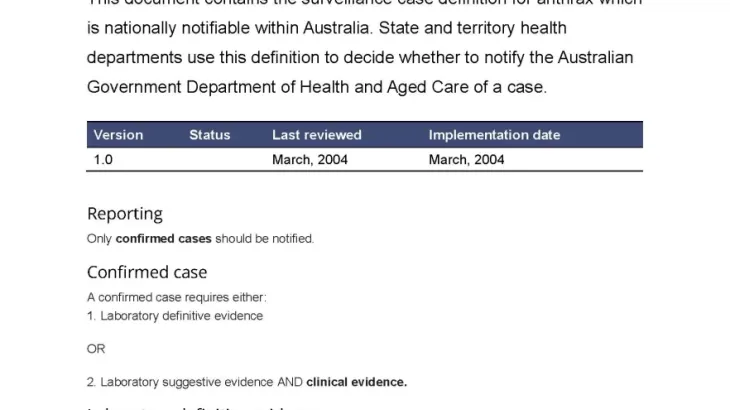
Read the anthrax surveillance case definition.
For information about anthrax in your state or territory, see:
If you need mental health support, see a list of organisations, websites and services that offer support, counselling and information.
Read more resources for professionals on anthrax: