

Last updated:
Filter results
You can narrow down the results using the filters
Disease
124 results
Search results
-

Women’s Health Week - shining a light on prevention and wellbeing
This Women's Health Week, women are encouraged to put their health first. Learn why prevention, early detection and regular health checks are important for lifelong wellbeing. -

World Field Epidemiology Day: the people behind preparedness
For World Field Epidemiology Day, we're recognising the experts working behind the scenes to protect Australia's health. -

H5 bird flu has been detected in other species but the risk to people in Australia remains low
H5 bird flu has been detected in birds and other wildlife in Australia, including mammals. The risk to people remains low. Avoid contact with sick or dead birds or animals, record what you see and report it to the Emergency Animal Disease Hotline. -

New national tuberculosis strategic plan released
Australia has a new 5-year strategic plan to progress towards eliminating tuberculosis and improving health equity. -

National viral hepatitis grants now available
We’re now inviting applications from eligible organisations for grants under the Continuation of the Viral Hepatitis Prevention and Response Measures Program. -

New report identifies actions to eliminate congenital syphilis
A report outlining priority actions that will help eliminate syphilis in newborns has been released. Find out how we are working across all Australian governments and the health sector to meet our goals. -

Risk to people in Australia from H5 bird flu remains low
H5 bird flu detections in Australian birds have increased, but the risk to people remains low. Avoid contact with sick or dead birds or animals, record what you see and report it to the Emergency Animal Disease Hotline. -

H5 bird flu detected in non-migratory seabird
Following the positive H5 avian influenza (bird flu) detection in a local greater crested tern, we reassessed public health risk and determined the risk to people in Australia remains low. We will continue to monitor the situation and re-assess risk as the situation evolves. -

Updated national guidance helps doctors protect Aussie workers from silica dust
Respirable crystalline silica causes serious and often life-threatening illnesses. New guidance for health professionals helps protect those most at risk. -

Detection of bird flu in Australia
Two seabirds found in an isolated area in southern Western Australia have returned positive results for H5 avian influenza (bird flu). The current risk of bird flu to people in Australia is low. -

New hepatitis B resources for healthcare providers and communities
Hepatitis Australia has developed new resources to encourage hepatitis B testing and connection to care, particularly for communities at higher risk. A simple blood test can help diagnose hepatitis B, and effective care is available. -
Australia’s CMO and CVO release joint statement on World Zoonosis Day 2025
Read the joint statement from Australia’s Chief Medical Officer and Chief Veterinary Officer on the importance of a One Health approach this World Zoonosis Day. -

Australia’s HPV vaccine program leads to 90% drop in prevalence, but gaps remain
Australia’s highly successful vaccine program has reduced HPV prevalence by 90% in vaccine eligible people, but a new report finds vaccination rates are dropping. -
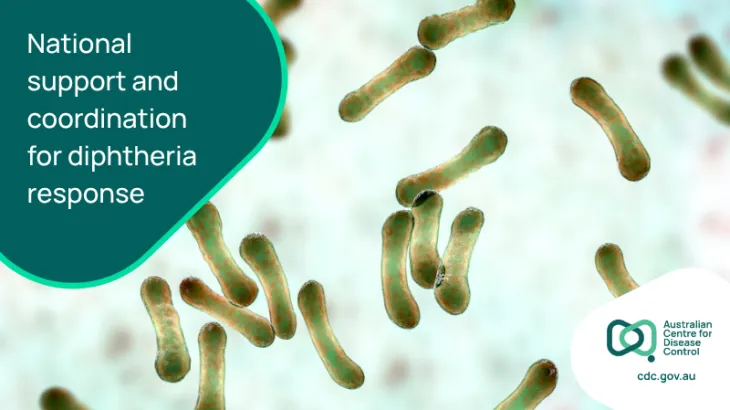
Diphtheria declared a Communicable Disease Incident of National Significance
Australia’s Chief Medical Officer, Professor Michael Kidd AO, today declared diphtheria a Communicable Disease Incident of National Significance (CDINS). -
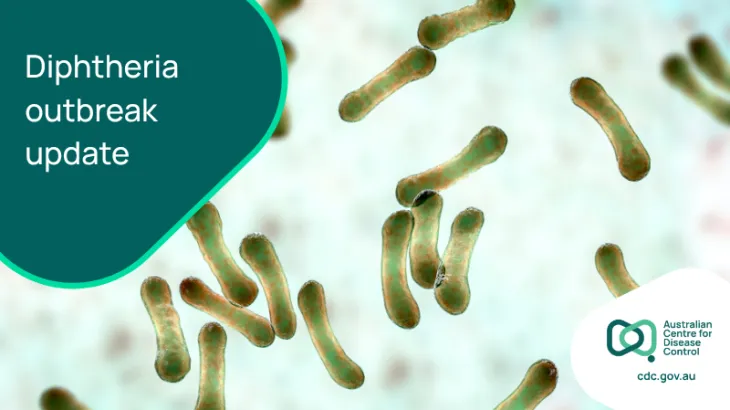
Diphtheria outbreak update
Australia is currently experiencing the biggest diphtheria outbreak since records began. Public health authorities in impacted states and territories, primarily the Northern Territory, Western Australia and South Australia, are working hard to manage and contain the outbreak. -

Ebola disease in DRC and Uganda
There is an outbreak of Ebola disease caused by Bundibugyo virus – a type of Ebola virus – in the Democratic Republic of Congo (DRC) and Uganda. The risk to Australia is low. -

MV Hondius passengers land in Australia
MV Hondius passengers today landed at RAAF Base Pearce and started their quarantine in the nearby Bullsbrook Centre for National Resilience. The risk of hantavirus to the Australian population is very low. -

MV Hondius passengers returning to Australia
On their return to Australia, the returned MV Hondius passengers will head into quarantine in Perth, with strict infection protection and control measures in place for their flight, arrival, transfer and quarantine. The risk of hantavirus to the Australian population remains low. -

Hantavirus risk to Australia remains low
The risk of hantavirus to the Australian and global population remains low. There are no reports of hantavirus infection in humans in Australia. -

Hantavirus infection reported on cruise ship in Atlantic
We are monitoring the hantavirus infection outbreak on a cruise ship in the Atlantic. Hantavirus has never been reported in humans in Australia, but Australians travelling to areas where hantavirus is common should take steps to protect themselves. -

Surveillance that works – finding poliovirus before it finds us
Poliovirus has been detected in a wastewater sample in Perth, Western Australia. Although the risk to the community remains very low, it’s a timely reminder to check you’re up to date with vaccination. -
Poliovirus detected in wastewater in Australia
Routine wastewater surveillance has detected vaccine-derived poliovirus in untreated sewage from the Subiaco wastewater treatment plant in Western Australia. -
Help shape the future of public health – apply to join our Advisory Council
We’re seeking expressions of interest from exceptional people to join our Advisory Council. This is your chance to use your expertise and experience to help protect Australia from health threats, now and in the years to come. -

Applications for Chief Medical Advisor now open
We are seeking an exceptional leader to take on the role of Chief Medical Advisor – a pivotal position at the centre of national public health leadership. This role will help shape how Australia understands and responds to public health risk. -

Australia recognised by WHO for safe containment of poliovirus samples
Australia has been awarded a World Health Organization (WHO) Certificate of Containment for its designated poliovirus laboratory facility.