Last updated:
Disease groups:
Botulism is a rare disease that affects the nervous system. It can cause death. It most often spreads through contaminated food, soil or dust. Babies under the age of 12 months are most at risk. Good food safety practices are the best protection. We monitor and report on botulism in our community.
Botulism is a rare but serious illness.
It is caused by a toxin produced by the bacterium Clostridium botulinum. The toxin affects the nervous system and can lead to paralysis and death if not treated quickly.
There are different types of botulism based on how it spreads to people.
Botulism is very rare in Australia. Most cases reported are in children aged under 12 months. But cases have also been linked to:
The illness is very serious and needs urgent treatment.
Many countries, including Australia, classify the bacteria and toxin that cause botulism as potential biological weapons. The Australian Government regulates handling of the bacteria and toxin.
Because of these major impacts, we:
If you’re looking for advice about your own health or treatment options, see healthdirect or speak with a qualified healthcare professional. Our role is to provide public health advice – information and guidance that helps prevent disease, protect communities and improve wellbeing at a population level.
Symptoms of botulism can include:
Symptoms in babies can include:
As botulism progresses, it can cause paralysis of breathing muscles and the body.
Read more about the symptoms, diagnosis and treatment of botulism.
healthdirect’s symptom checker can help you decide whether to see a doctor.
Symptoms of foodborne botulism can appear 6 hours to 8 days after infection.
Other types of botulism can take up to 14 days or longer for symptoms to develop.
The shorter the time between being exposed and developing symptoms, the more severe the illness.
The bacteria are found in soil and environments worldwide.
They can grow and produce toxin in:
People can get sick after:
Intestinal botulism in an infant aged under 12 months is called infant botulism. It is usually caused by babies ingesting contaminated soil or honey.
Botulism does not spread between people.
The best ways to protect against botulism are to:
Read more about:
Some people are at greater risk of getting botulism or getting very sick from it.
People at greater risk should take steps to protect themselves.
Botulism poses a greater risk of severe illness for:
People might be more likely to be exposed if they:
Botulism can be diagnosed by testing a sample of:
You can use healthdirect’s directory to find a health service near you.
People with botulism need urgent treatment and will usually be cared for in hospital. They might be treated with specific medicines to target the toxin as well as supportive care.
Infected wounds might need surgery.
Read more about how to manage or treat botulism.
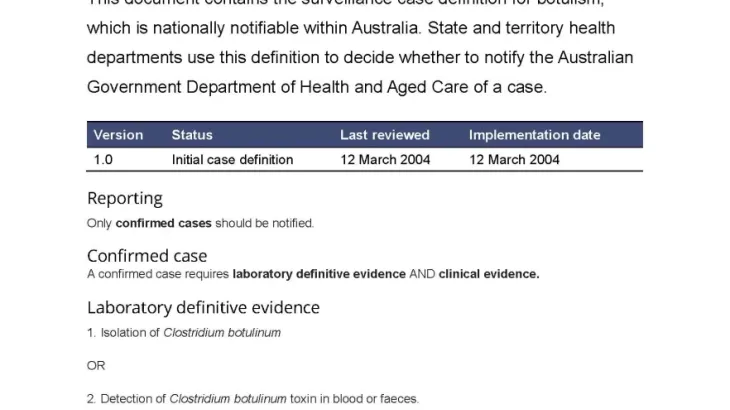
Botulism is a nationally notifiable disease – these are diseases that present a risk to public health.
Health authorities in each state and territory report new laboratory confirmed cases to us through the National Notifiable Diseases Surveillance System.
The OzFoodNet network also monitors and responds to foodborne diseases in Australia.
This is part of our surveillance activities, which help us monitor case numbers around the country and understand disease patterns.
We analyse the data and report on case numbers and other data through our data visualisation tool, where you can filter and search the latest information.
Botulism outbreaks are rare in Australia.
Public health authorities focus on finding the source of the outbreak.
Other actions during outbreaks can include:
If the source was commercially prepared food, public health authorities might:
Read more about how the Australian Government defines and plans for outbreaks.
For information about botulism in each state or territory, see:
If you need mental health support, see a list of organisations, websites and services that offer support, counselling and information.