Last updated:
Disease groups:
Brucellosis is an infection caused by bacteria. It most often spreads to people through contact with infected animals or animal products – especially feral pigs. It can be serious. We monitor and report on brucellosis in our community, including national case numbers and trends.
Brucellosis is an infection caused by Brucella bacteria.
It usually spreads to people from infected animals.
In Australia, Brucella infections in humans are rare.
Brucellosis is found globally and is a common disease that spreads from animals to people.
In Australia, infections are rare in people and domestic animals, however, people and dogs who interact with feral pigs are at risk.
Brucella bacteria can survive in the environment (soil, water and dust contaminated with animal fluids) for several months, particularly in cool moist conditions.
Brucellosis during pregnancy can cause serious complications for unborn babies – including death.
Because of these major impacts, we:
If you’re looking for advice about your own health or treatment options, see healthdirect or speak with qualified healthcare professional. Our role is to provide public health advice – information and guidance that helps prevent disease, protect communities and improve wellbeing at a population level.
Common symptoms include:
Complications can include:
Infection during pregnancy can lead to:
healthdirect’s symptom checker can help you decide whether to see a health professional.
Symptoms usually start between 2 and 4 weeks after getting infected. But this can range from 5 days to 2 months.
People can get brucellosis from infected animals by:
Rarely, people can become infected by breathing in the bacteria. This could potentially occur in a laboratory setting without appropriate personal protective equipment.
In Australia, feral pigs are the main source of infections in people.
In other countries, various domestic and wild animals – including sheep, goats, cows and camels – can be infected.
Brucellosis rarely spreads between people.
The best ways to protect against brucellosis are to:
It is especially important for pregnant people to avoid contact with feral pigs or pig hunting dogs.
People who work around animals should:
Some people are at greater risk of getting brucellosis or getting very sick from it.
People at greater risk should take steps to protect themselves.
Brucellosis poses a greater risk of severe illness for pregnant people and their unborn babies.
People might be at greater risk of being exposed to brucellosis if they:
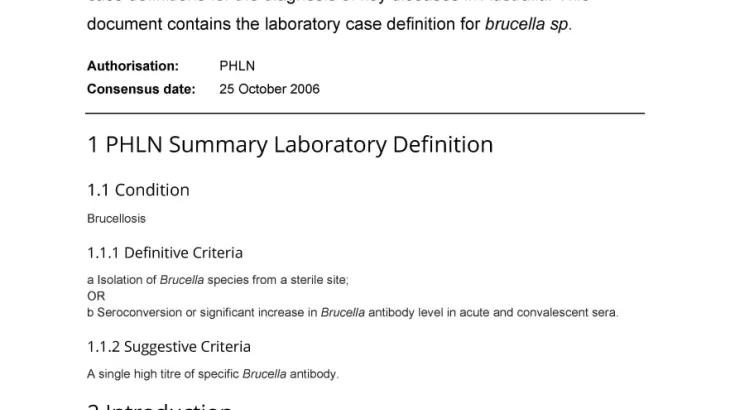
Health professionals can diagnose brucellosis through a blood test.
You can use healthdirect’s directory to find a health service near you.
Brucellosis is treated with antibiotics.
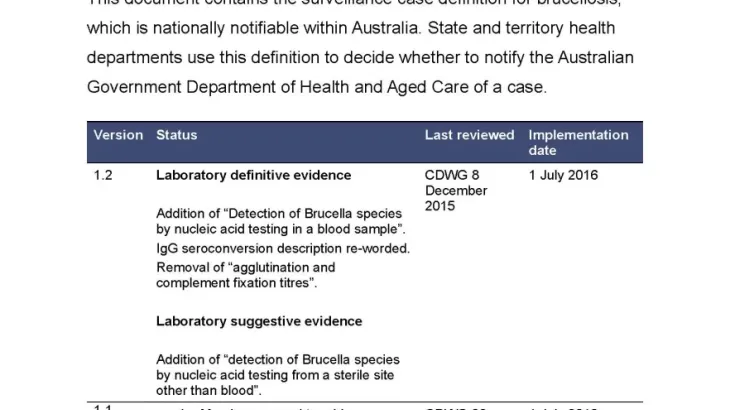
Brucellosis is a nationally notifiable disease – these are diseases that present a risk to public health.
Public health authorities take a One Health approach to the surveillance of brucellosis. In addition to human disease surveillance, relevant government departments help monitor brucellosis in feral pigs and other animals.
Health authorities in each state and territory report new laboratory confirmed cases or probable cases to us through the National Notifiable Diseases Surveillance System.
This is part of our national surveillance activities, to monitor case numbers around the country and understand disease patterns.
We analyse the data and report on case numbers and other data through our data visualisation tool, where you can filter and search the latest information.
Control measures used during outbreaks focus on humans, animals and the environment, and might include:
Read more about how the Australian defines and plans for outbreaks.
For information about brucellosis in your state or territory, see:
If you need mental health support, see a list of organisations, websites and services that offer support, counselling and information.
For travel advice, see Smartraveller.