Last updated:
Disease groups:
Cholera is a bacterial infection that causes diarrhoea and dehydration. It spreads to people through contaminated food or water. Safe drinking water, good hygiene and sanitation are the best protection.
Cholera is an illness caused by toxin-producing strains of the bacterium Vibrio cholerae.
People can get cholera by consuming contaminated food or water. The infection affects the gut and can cause diarrhoea.
Most cholera infections are mild, but some can be serious.
Cholera is rare in Australia. Most people diagnosed with cholera in Australia acquired their infection while travelling in countries with reduced access to clean water and sanitation.
Very rarely, infections can occur in Australia from:
Cholera can cause severe diarrhoea and life-threatening dehydration in some people. If not treated quickly, it can cause death.
If you’re looking for advice about your own health or treatment options, see healthdirect or speak with a qualified healthcare professional. Our role is to provide public health advice – information and guidance that helps prevent disease, protect communities and improve wellbeing at a population level.
Most people have mild symptoms. Some people have no symptoms.
Symptoms of cholera include:
If not treated promptly, serious complications include:
Read more about symptoms, diagnosis and treatment of cholera.
healthdirect’s symptom checker can help you decide whether to see a healthcare professional.
Symptoms usually start within 2 to 3 days after getting infected. But this can range from several hours to 5 days.
Cholera spreads when people eat food or drink water contaminated with the stool of an infected person.
People can also get cholera by eating raw or undercooked seafood from contaminated waters.
Cholera does not usually spread directly from person to person.
People with cholera are usually infectious while they have diarrhoea and for a short time after symptoms have resolved.
Some people who do not have symptoms can also spread the bacteria.
A cholera vaccination is available in Australia. It is only recommended for certain travellers (aged 2 years and older) who are travelling to areas where there is a high likelihood of exposure to cholera.
Not all travellers to areas with cholera are recommended to have a vaccination.
People travelling to an area with cholera should talk to a healthcare professional at least 6 weeks before they plan to leave Australia.
Healthcare professionals can read more about cholera vaccination in the Australian Immunisation Handbook.
Ensuring access to safe food and water is the most important way to prevent cholera.
People who are in areas where cholera is common should:
If travelling, follow Smartraveller advice and read how to prevent infectious diseases while travelling.
Cholera poses a greater risk of severe illness for people:
People are at greater risk of being exposed to cholera if they are in an area where cholera is common or where an outbreak is occurring.
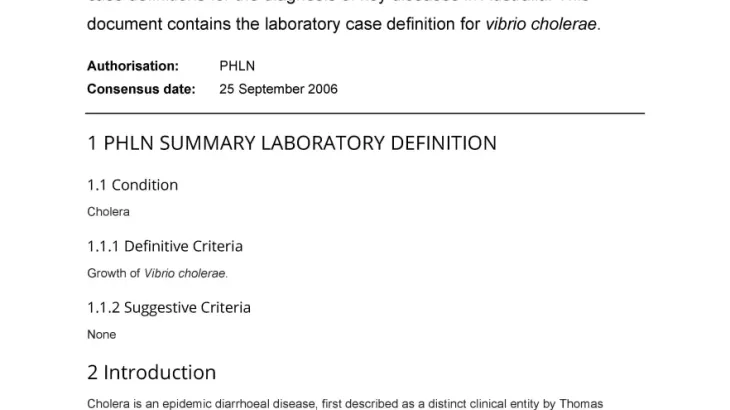
Cholera is usually diagnosed through a stool test.
You can use healthdirect’s directory to find a health service near you.
The most important treatment for cholera is prompt replacement of fluids and electrolytes with oral rehydration solution.
People with severe dehydration may require treatment in hospital. Antibiotics may be given to people with severe illness.
Read more about how to manage or treat cholera.
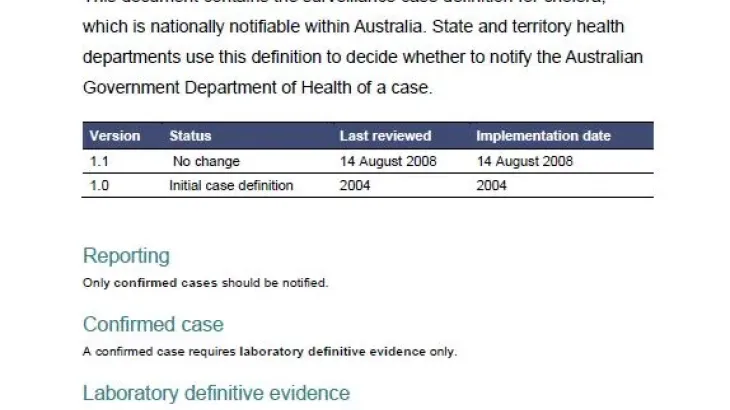
Cholera is a nationally notifiable disease – these are diseases that present a risk to public health.
Health authorities in each state and territory report new laboratory confirmed cases to us through the National Notifiable Diseases Surveillance System.
The OzFoodNet network also monitors and responds to foodborne diseases in Australia. Read more in OzFoodNet’s annual reports.
This is part of national surveillance to monitor case numbers and disease patterns.
Use our data visualisation tool to search the latest data.
The risk of a cholera outbreak occurring in Australia is very low. If an outbreak did occur, the response would focus on:
Some cholera outbreaks may require a One Health response. A One Health response involves collaboration between human health, animal health and environmental sectors. This is because of potential impacts on seafood industries, trade and ecosystem health.
Read more about we define and plan for outbreaks.
For information about cholera in your state or territory, see:
If you need mental health support, see a list of organisations, websites and services that offer support, counselling and information.
For travel advice, see: