Last updated:
Disease groups:
Cryptosporidiosis is a type of gastroenteritis caused by a parasite. It usually spreads to people through contaminated water and food. Safe food practices and good hygiene are the best protection. We monitor and report on national case numbers and trends.
Cryptosporidiosis is a disease caused by the parasite Cryptosporidium.
The parasite can live in the intestines of people and animals.
Most people with cryptosporidiosis get diarrhoea and stomach cramps, but some can develop serious complications, especially if they are immunocompromised.
Cryptosporidiosis is a major cause of gastroenteritis worldwide.
In Australia, infections are most common in children aged under 10 years.
The parasite can survive in chlorinated water, and contaminated water can cause outbreaks. In Australia, outbreaks of cryptosporidiosis have been associated with:
Because of this, we:
If you’re looking for advice about your own health or treatment options, see healthdirect or speak with a qualified healthcare professional. Our role is to provide public health advice – information and guidance that helps prevent disease, protect communities and improve wellbeing at a population level.
Symptoms can include:
More serious complications can include:
Most people will get better within about 1 to 2 weeks. But some people may relapse and get symptoms again.
Read more about the symptoms, diagnosis and treatment of cryptosporidiosis.
healthdirect’s symptom checker can help you decide whether to see a health professional.
Symptoms usually start about 7 days after getting infected. But this can range from 1 to 12 days.
Cryptosporidium is found in the stool of infected people and animals, including farm animals, pets and wildlife.
People can get infected if the parasite enters their mouth through:
People are most infectious while they have diarrhoea but can spread the parasite for weeks after their symptoms stop.
There is no vaccine against cryptosporidiosis.
The best protection is to maintain good hygiene and frequently wash hands well with soap and water for at least 20 seconds, especially:
Hand sanitiser is not effective against Cryptosporidium. Soap and water must be used for hand washing.
It is also important to:
People with cryptosporidiosis should not:
Children with cryptosporidiosis should not attend early childhood education and care centres until they have had no diarrhoea or vomiting for at least 24 hours.
Read more ways to prevent cryptosporidiosis.
Anyone can get cryptosporidiosis, but some people are at greater risk of getting it or getting very sick.
Cryptosporidium spreads more easily in countries with lower water quality and sanitation. People should know the risks for where they are going before they travel and take steps to protect themselves.
Cryptosporidiosis poses a greater risk of severe illness for people who are immunocompromised.
People are at greater risk of being exposed to Cryptosporidium if they live with or provide care for someone with cryptosporidiosis.
The risk might also be greater for people who:
Cryptosporidiosis is diagnosed through a stool test.
You can use healthdirect’s directory to find a health service near you.
Most people with cryptosporidiosis will get better within 2 weeks without specific treatment. Treatment is supportive, including drinking plenty of fluids.
People with severe or long-lasting diarrhoea might be prescribed medicine.
Read more about how to manage or treat cryptosporidiosis.
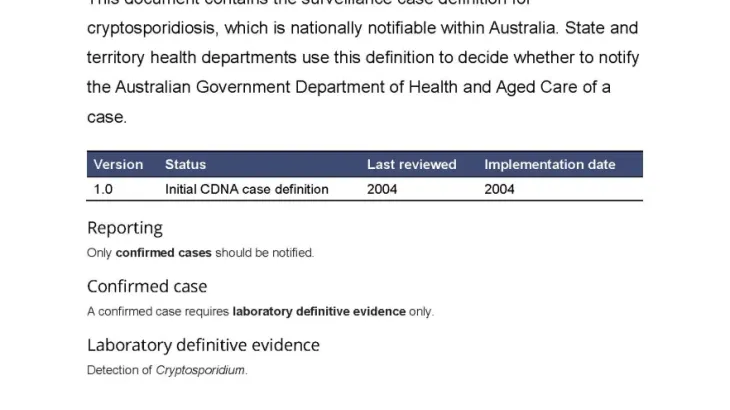
Cryptosporidiosis is a nationally notifiable disease – these are diseases that present a risk to public health.
Health authorities in each state and territory report new laboratory confirmed cases to us daily through the National Notifiable Diseases Surveillance System.
The OzFoodNet network also monitors and responds to foodborne diseases in Australia.
We take a One Health approach to cryptosporidiosis surveillance activities. We work with other government agencies to help us monitor case numbers around the country and understand disease patterns.
We analyse the data and report on case numbers and other data through our data visualisation tool, where you can filter and search the latest information.
How public health agencies respond to cryptosporidiosis outbreaks depends on:
Managing these outbreaks can require major public health action, such as:
Actions public health authorities might take include:
Read more about how the Australian Government defines and plans for outbreaks.
For information about cryptosporidiosis in your state or territory, see:
If you need mental health support, see a list of organisations, websites and services that offer support, counselling and information.
For travel advice, see Smartraveller.