Last updated:
Disease groups:
Diphtheria is a serious bacterial infection of the respiratory tract or skin. It most often spreads through coughing and sneezing, or direct contact with the wound. Getting vaccinated is the best protection.
Diphtheria was declared a Communicable Disease Incident of National Significance on 22 May 2026.
Public health authorities are responding to diphtheria outbreaks in some parts of Australia.
Areas considered higher risk currently include:
If you live in or visit one of these areas, you should:
For the latest information, check the advice in your state or territory.
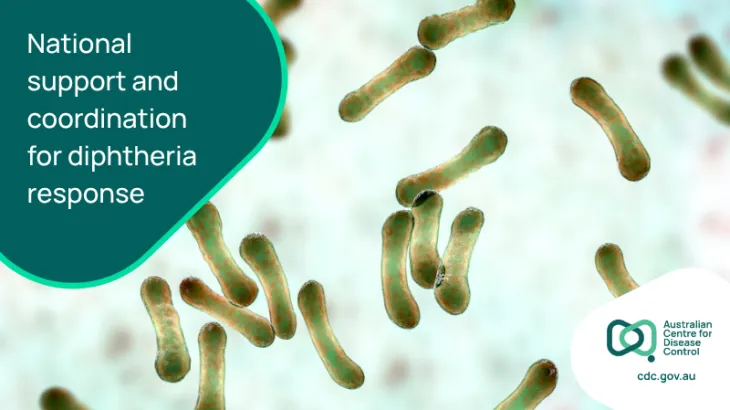
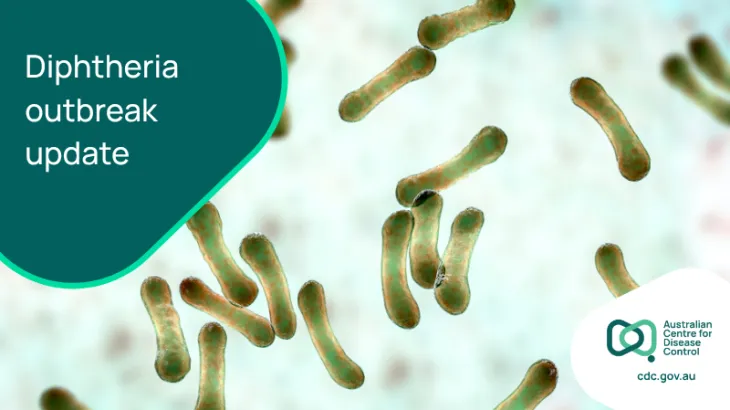
Diphtheria is caused by toxin-producing Corynebacterium diphtheriae or, rarely, Corynebacterium ulcerans bacteria.
The bacteria can:
The bacteria can also make toxins, which lead to serious complications.
Read more about diphtheria.
Diphtheria can cause severe illness and death.
In communities with lower vaccination coverage, diphtheria can cause more serious illness and spread more easily.
Before routine vaccination, diphtheria was a common cause of death in children in Australia.
Diphtheria is now uncommon in Australia, but recent outbreaks in some remote and regional parts of the Northern Territory, Western Australia and South Australia have led to a sharp increase in infections since late 2025. Public health efforts are focused on providing vaccinations to people in affected areas.
If you’re looking for advice about your own health or treatment options, see healthdirect or speak with a qualified healthcare professional. Our role is to provide public health advice – information and guidance that helps prevent disease, protect communities and improve wellbeing at a population level.
Symptoms depend on where the infection happens in the body – either the respiratory tract or the skin.
Respiratory diphtheria symptoms can include:
Within a few days, toxin made by the bacteria can cause a greyish-white membrane to form in the throat. This can lead to serious symptoms including:
The toxin can cause myocarditis (inflammation of the heart) and paralysis (nerve damage).
Without quick treatment, respiratory diphtheria can be serious or even fatal.
Cutaneous (skin) diphtheria symptoms can cause:
Cutaneous diphtheria wounds are slow to heal and become chronic if left untreated.
healthdirect’s symptom checker can help you decide whether to see a health professional.
Diphtheria symptoms usually appear 2 to 5 days after infection but this can be longer.
Corynebacterium diphtheriae spreads from person to person, usually after close or prolonged contact.
Spreads between people can happen through:
Some people carry the bacteria in their nose or throat without getting symptoms. These people can unknowingly spread the bacteria to others and make them sick.
Although rare, the Corynebacterium ulcerans bacteria can spread from animals to people through:
Read more about how diphtheria spreads.
People are thought to be infectious from up to a week before symptoms start and for up to 6 weeks without treatment.
Antibiotics can shorten this period.
Vaccination is the best way to protect against illness and severe complications from the diphtheria toxin.
Multiple doses and booster doses are needed for immunity.
Vaccination is recommended for:
Eligible people can get the diphtheria combination vaccine for free under the National Immunisation Program or state or territory programs. If you are not eligible for a free vaccine, you can buy one from your healthcare professional or pharmacy.
If you live in, work in, or are travelling to an area with a diphtheria outbreak, you should:
Healthcare professionals should refer to the ATAGI advice on diphtheria vaccination in outbreak settings.
To protect others, people who are unwell or have diphtheria should:
Read more about preventing diphtheria.
Some people are at greater risk of getting diphtheria or getting very sick from it.
If you are at greater risk, it is especially important to make sure you have received the recommended doses of diphtheria containing vaccine.
Diphtheria poses a greater risk of severe illness for:
People might be at greater risk of being exposed to diphtheria if they:
The diagnosis of diphtheria is made in a medical laboratory. A healthcare professional will collect a swab from:
You can use healthdirect’s directory to find a health service near you.
If diphtheria is suspected, treatment starts straight away. Some people may be treated in a hospital.
Diphtheria is treated with antibiotics – these should always be taken as directed.
Some people with diphtheria may also be given antitoxin.
People who have not recently had a vaccination against diphtheria might be offered one.
Read more about how to manage or treat diphtheria.
Diphtheria is a nationally notifiable disease – these are diseases that present a risk to public health.
Health authorities in each state and territory report new cases to us daily through the National Notifiable Diseases Surveillance System.
This is part of national surveillance activities, to monitor case numbers, understand disease patterns and risk factors.
We analyse the data and publish case numbers and other data through our data visualisation tool, where you can filter and search the latest information.
Read more about the epidemiology of diphtheria in Australia.
Public health units might respond to a diphtheria outbreak by:
For information about diphtheria in each state or territory, see:
If you need mental health support, see a list of organisations, websites and services that offer support, counselling and information.
For travel advice, see Smartraveller.