Last updated:
Disease groups:
Hepatitis D is a viral infection that affects the liver. Hepatitis D only occurs in people with hepatitis B. Chronic infection can cause serious liver disease. Vaccination against hepatitis B is the best protection.
Hepatitis D (also called hepatitis delta) is a viral infection of the liver.
Unlike most viruses, hepatitis D cannot spread on its own. It needs hepatitis B to multiply and spread between people. People can only get hepatitis D if they also have hepatitis B.
Hepatitis D infection may occur as a:
Vaccination against hepatitis B is the best way to prevent hepatitis D.
Hepatitis D is a rare but severe form of viral hepatitis.
Some people with co-infection and almost all people with a superinfection develop chronic hepatitis D.
People with hepatitis D are more likely to develop serious liver disease than people with hepatitis B alone.
Hepatitis D is uncommon in Australia.
On average, 77 hepatitis D notifications were reported each year between 2019 and 2023. Since then, reports of hepatitis D have increased, likely due to increased testing.
It is possible that hepatitis D remains under-diagnosed in Australia.
If you’re looking for advice about your own health or treatment options, see healthdirect or speak with a qualified healthcare professional. Our role is to provide public health advice – information and guidance that helps prevent disease, protect communities and improve wellbeing at a population level.
Like hepatitis B, many people don’t get symptoms. For those with symptoms, these can include:
Chronic hepatitis D increases the likelihood of complications including:
healthdirect’s symptom checker can help you decide whether to see a health professional.
If symptoms appear, they usually start 2 to 8 weeks after infection.
Hepatitis D spreads in the same way as hepatitis B – through blood-to-blood contact and some body fluids, such as semen and vaginal fluids.
Spread can happen through:
Australia has screened all blood and related products since the early 1990s, so the risk of infection from blood transfusions is extremely low.
Rarely, hepatitis D can spread from a pregnant person to their baby.
Hepatitis D virus does not spread through sharing food, or casual contact.
People can spread hepatitis D while the virus is present in their blood. For people with chronic hepatitis D infection, this may be for many years.
Vaccination against hepatitis B provides the best protection against hepatitis D.
There is no specific vaccination against hepatitis D.
Eligible people can get hepatitis B vaccines for free under the National Immunisation Program or state or territory programs. If you are not eligible for a free vaccine, you can buy one from your health professional or pharmacy.
Read more about hepatitis B vaccination in the Australian Immunisation Handbook.
Other prevention measures include:
These prevention measures are especially important for people living with hepatitis B, to help prevent hepatitis D superinfection.
If you have hepatitis D, it is important to attend regular check-ups to monitor for liver disease. You should do this even if you don’t have any signs of illness.
People with chronic hepatitis B who get hepatitis D virus (superinfection) are at greater risk of severe disease than those who get hepatitis B and hepatitis D at the same time (co-infection).
The risk of severe disease is also greater for people with other types of liver disease.
Some groups are at greater risk of developing chronic hepatitis B due to increased risk of exposure or inequitable access to prevention, monitoring and treatment.
People can only get hepatitis D if they also have hepatitis B.
People might be at greater risk of hepatitis D if they:
You can use healthdirect’s directory to find a health service near you.
Health professionals can diagnose hepatitis D through blood tests.
If your doctor has diagnosed you with hepatitis B, talk to them about testing for hepatitis D.
Most people with hepatitis D don’t have symptoms until liver damage occurs. This means infections can go unnoticed. That’s why testing is important for people who are at increased risk of exposure or whose health professional has diagnosed hepatitis B.
A specialist doctor usually treats hepatitis D with supportive care.
People with hepatitis D need regular monitoring.
Health professionals monitor people with chronic hepatitis D for liver damage. It’s important people with chronic hepatitis D to have regular monitoring, even if they feel well.
Health professionals might prescribe medication for some people to help prevent serious liver problems.
HepLink Australia provides confidential, free and localised viral hepatitis support to callers anywhere in Australia.
Read more about:
Hepatitis D is a nationally notifiable disease as it poses a risk to public health.
Health authorities in each state and territory report new cases to us through the National Notifiable Diseases Surveillance System.
This is part of national surveillance to monitor case numbers and understand disease patterns.
Use our data visualisation tool to search the latest data.
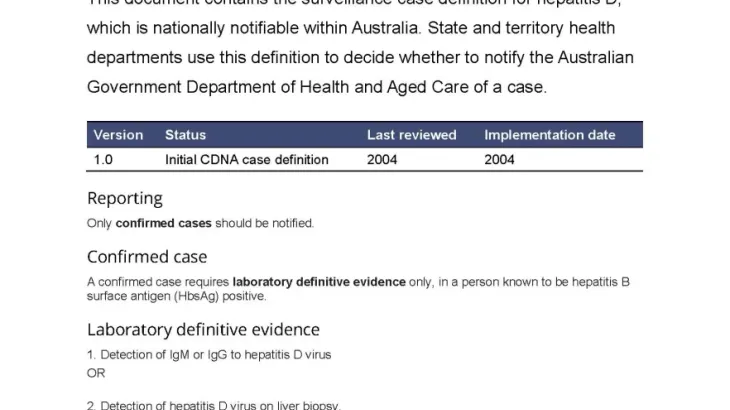
Read the hepatitis D surveillance case definition.
For more information about hepatitis D, see:
For information about hepatitis D in your state or territory, see:
If you need mental health support, see a list of organisations, websites and services that offer support, counselling and information.
For travel advice, see Smartraveller.
Read more resources for professionals about hepatitis D: