Last updated:
Disease groups:
Hepatitis E is a viral infection of the liver. It mainly spreads through contaminated food or water. It can be serious. Good hygiene and food safety practices are the best protection. We monitor and report on national case data and trends.
Hepatitis E is an infection of the liver caused by a virus.
It mainly spreads through contaminated food or water.
Most people recover from hepatitis E, but it can be severe, especially for certain groups.
Hepatitis E is common in some overseas countries with poor access to clean water, sanitation and health services.
Infections are rare in Australia. Most people get the virus while travelling overseas. But there have been local outbreaks linked to contaminated pork products.
Some people – especially pregnant people – are more likely to experience serious complications from hepatitis E.
Because of this, we:
If you’re looking for advice about your own health or treatment options, see healthdirect or speak with a qualified healthcare professional. Our role is to provide public health advice – information and guidance that helps prevent disease, protect communities and improve wellbeing at a population level.
Some people with hepatitis E have no symptoms – especially children.
Symptoms include:
Some people can develop complications and might need hospitalisation.
Rarely, hepatitis E can cause acute liver failure and death.
Pregnant people with hepatitis E are at increased risk of acute liver failure, fetal loss and death.
healthdirect’s symptom checker can help you decide whether to see a health professional.
Symptoms usually start between 15 and 64 days after getting infected.
Hepatitis E spreads when stool containing the virus contaminates food, water, hands or objects, and then enters someone’s mouth.
Hepatitis E can spread by:
Hepatitis E can pass to the baby during pregnancy.
It is not well understood how long people with hepatitis E are infectious. People are thought to be infectious before their symptoms start until about 6 weeks after their symptoms appear.
There is no vaccine against hepatitis E.
In Australia, the best way to prevent hepatitis E is to practise:
People who travel to a part of the world where hepatitis E is more common should also:
For travel advice, see Smartraveller.
Until told by a healthcare professional that they can resume normal activities, people with hepatitis E should not:
People with hepatitis E who work as food handlers or in jobs where they provide close personal care to people should check with their healthcare professional before returning to work.
Frequent, thorough hand washing can reduce the risk of spreading hepatitis E to others.
Read more ways to prevent hepatitis E.
Some people are at greater risk of getting hepatitis E or getting very sick from it.
Some settings make it more likely for hepatitis E virus to spread. These include:
People at greater risk should take steps to protect themselves.
Hepatitis E poses a greater risk of severe illness for:
People might be at greater risk of being exposed to hepatitis E if they:
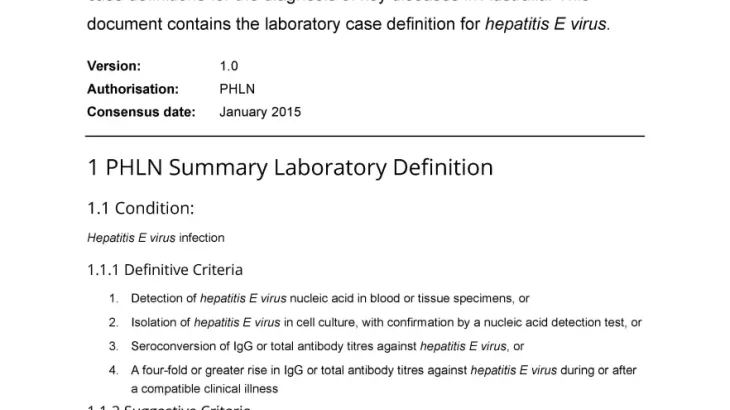
Healthcare professionals can diagnose hepatitis E through a blood test.
You can use healthdirect’s directory to find a health service near you.
There is no specific treatment for hepatitis E.
People who develop serious illness might need to be cared for in hospital.
Read more about how to manage or treat hepatitis E.
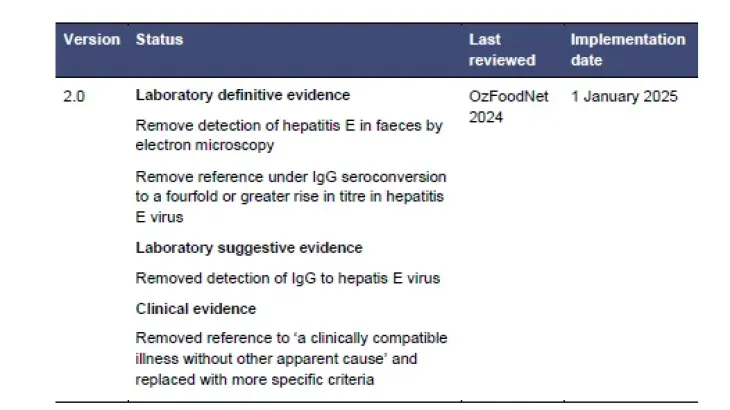
Hepatitis E is a nationally notifiable disease – these are diseases that present a risk to public health.
Health authorities in each state and territory report new laboratory confirmed cases to us through the National Notifiable Diseases Surveillance System.
The OzFoodNet network monitors and responds to foodborne diseases in Australia, including hepatitis E.
This is part of our surveillance activities, which help us monitor case numbers around the country and understand disease patterns.
We analyse the data and report on case numbers and other data through our data visualisation tool, where you can filter and search the latest information.
Outbreaks of hepatitis E are rare in Australia.
The response to outbreaks of hepatitis E focuses on:
Actions in an outbreak might include:
Read more about how the Australian Government defines and plans for outbreaks.
For information about hepatitis E in your state or territory, see:
If you need mental health support, see a list of organisations, websites and services that offer support, counselling and information.
For travel advice, see Smartraveller.