Last updated:
Disease groups:
Invasive pneumococcal disease (IPD) is a rare but serious bacterial infection. It usually spreads through respiratory droplets or respiratory secretions. Getting vaccinated is the best protection.
IPD is caused by bacteria called Streptococcus pneumoniae – also known as pneumococcus. These bacteria can often live harmlessly in the nose and throat causing no symptoms.
Most pneumococcal infections are not invasive and include ear and sinus infections.
But when pneumococcal bacteria enter parts of the body where bacteria are not usually found – like the blood, brain and spinal cord or lungs – the infection becomes invasive and can cause severe or life-threatening disease.
IPD can cause severe illness and death if not treated quickly.
Some types of Streptococcus pneumoniae have evolved to become resistant to some antibiotics. This means infections with these strains are harder to treat. Detecting antibiotic-resistant Streptococcus pneumoniae is critical to prevent further spread of resistant strains.
Pneumococcal vaccines are very effective. Since the vaccines were added to the National Immunisation Program, IPD in children aged under 2 years has reduced substantially.
If you’re looking for advice about your own health or treatment options, see healthdirect or speak with a qualified healthcare professional. Our role is to provide public health advice – information and guidance that helps prevent disease, protect communities and improve wellbeing at a population level.
IPD symptoms vary depending on where the infection is in the body. The most common IPD presentations are:
Meningitis symptoms can include:
Pneumonia symptoms can include:
Bloodstream infection symptoms can include:
Read more about the symptoms, diagnosis and treatment of IPD.
healthdirect’s symptom checker can help you decide whether to see a healthcare professional. If you or someone you care for has serious symptoms, see your healthcare professional immediately.
Symptoms usually start between 1 and 3 days after getting infected.
Pneumococcal bacteria are carried in the nose or throat of healthy people. They can spread to other people by:
People can get IPD more than once.
It is not well known how long people with IPD can spread the bacteria to others.
People who are treated with antibiotics are usually no longer infectious after about 1 to 2 days.
Vaccination is the best protection against IPD.
Vaccination is recommended for:
Eligible people can get pneumococcal vaccines for free under the National Immunisation Program or state or territory programs. Your healthcare professional or vaccine provider can help you determine how many doses you or your child need. If you are not eligible for a free vaccine, you can buy one from your health professional or pharmacy.
Some people are at greater risk of getting IPD or being exposed to the bacteria that cause it.
IPD is a severe illness. People at greater risk of developing IPD might include:
People might be at greater risk of being exposed to the bacteria if they spend a lot of time in crowded settings.
This might include:
IPD can be diagnosed with tests of samples that might include:
You can use healthdirect’s directory to find a health service near you.
People with IPD are usually treated with antibiotics and cared for in hospital.
Read more about how to manage or treat IPD.
IPD is a nationally notifiable disease – these are diseases that present a risk to public health.
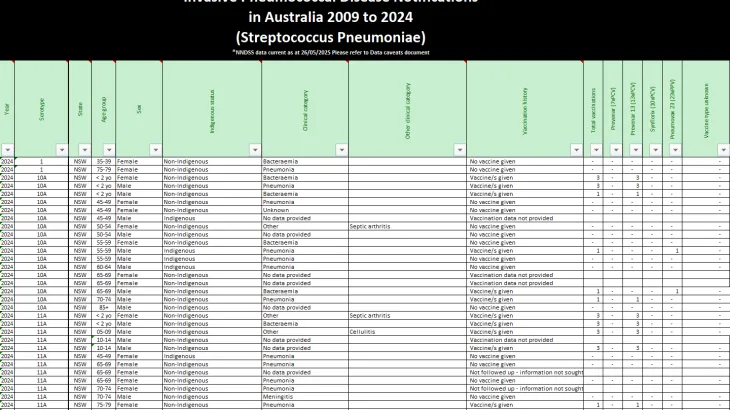
Health authorities in each state and territory report new laboratory confirmed cases to us through the National Notifiable Diseases Surveillance System.
This is part of national surveillance to monitor case numbers around the country and understand disease patterns.
We analyse and report on IPD case numbers through our data visualisation tool, where you can filter and search the latest information.
Outbreaks of IPD are rare, but they can occur in some settings.
Public health authorities might respond to outbreaks of IPD. Actions might include providing information about IPD and how to prevent it.
Read more about how the Australian Government defines and plans for outbreaks.
For information about IPD in each state or territory, see:
If you need mental health support, see a list of organisations, websites and services that offer support, counselling and information.