Last updated:
Disease groups:
Plague is a rare but serious bacterial disease. It mainly spreads through bites from infected fleas that live on rodents. Australia has not had a case of plague in a person since the 1920s. Avoiding contact with fleas and rodents when travelling to places where plague occurs is the best protection.
Plague is an infectious disease caused by the bacterium Yersinia pestis.
It can result in serious illness and death.
There are 3 main clinical forms of plague:
Bubonic plague is the most common type.
Plague can cause severe disease and death if not treated early.
Bubonic plague causes death in 30–60% of untreated cases. Septicaemic and pneumonic plague almost always result in death if untreated.
Plague is very rare in Australia. Australia has not had a case of plague in a person since the 1920s.
People can get infected if they travel to areas where the disease is found, including parts of Africa, Asia and the Americas.
If you’re looking for advice about your own health or treatment options, see healthdirect or speak with a qualified healthcare professional. Our role is to provide public health advice – information and guidance that helps prevent disease, protect communities, and improve wellbeing at a population level.
Symptoms depend on the type of plague. Common symptoms include:
Bubonic plague symptoms include swollen and painful lymph nodes (buboes).
Septicaemic plague symptoms include:
Pneumonic plague symptoms:
Complications can include sepsis, respiratory failure and death.
Symptoms usually start 2 to 8 days after exposure to the bacteria.
Plague mainly spreads from animals to people through bites from infected fleas that live on rodents.
People can also be infected through:
Bubonic and septicaemic plague do not usually spread between people.
Pneumonic plague can spread between people through the air.
People with plague are infectious from the start of symptoms until 48 hours after starting appropriate antibiotic treatment.
There is no routine vaccination for plague in Australia.
When travelling overseas to affected areas:
Anyone with plague is at risk of severe disease.
People might be at greater risk of being exposed to plague if they travel to or live in countries where plague occurs. The risk is likely to be higher for people who:
Laboratory workers handling Yersinia pestis are also at greater risk.
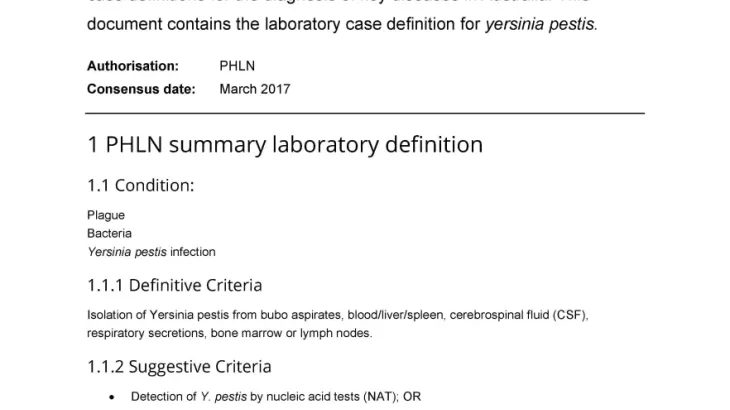
Plague is usually diagnosed through laboratory testing of:
The Australian Government regulates the handling of the bacteria that cause plague. This is because of their potential to be misused in an act of bioterrorism or biocrime. Read more about security sensitive biological agents.
Plague is treated with antibiotics. Early treatment reduces the risk of severe illness and death.
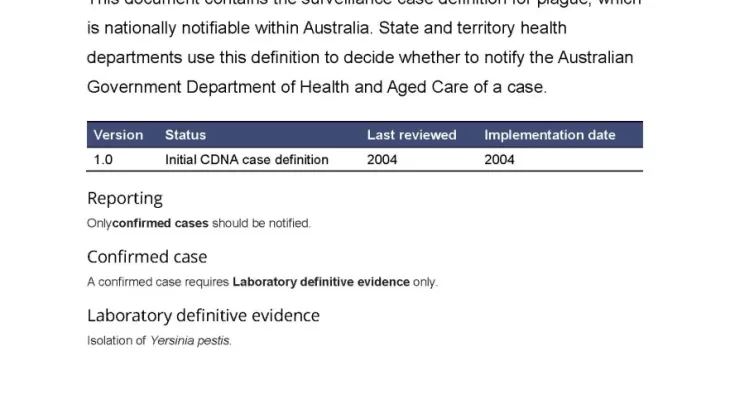
Plague is a nationally notifiable disease – these are diseases that present a risk to public health.
Health authorities in each state and territory would report new cases to us through the National Notifiable Diseases Surveillance System.
This is part of national surveillance to monitor case numbers and disease patterns.
Plague is very rare in Australia. There has not been a case of plague in a person in Australia since the 1920s.
Read more about how the Australian Government defines and plans for outbreaks.
For information about plague in your state or territory, see:
If you need mental health support, see a list of organisations, websites and services that offer support, counselling and information.
For travel advice, see Smartraveller.