Last updated:
Disease groups:
Psittacosis is a bacterial infection that usually spreads to people from infected birds. Avoiding contact with bird droppings and cleaning cages safely can reduce the risk.
Psittacosis (also known as ornithosis) is a disease caused by the Chlamydia psittaci bacterium.
It most often spreads to people from infected birds.
Psittacosis infections are usually mild, but they can be serious and cause death, especially in priority groups.
Psittacosis is uncommon in Australia. Each year about 10 to 50 people are diagnosed with the disease.
There is no vaccine for psittacosis.
Outbreaks can occur from exposure to birds or contaminated bird environments.
If you’re looking for advice about your own health or treatment options, see healthdirect or speak with a qualified healthcare professional. Our role is to provide public health advice – information and guidance that helps prevent disease, protect communities and improve wellbeing at a population level.
Common symptoms include:
Symptoms can range from mild to severe.
Complications can include:
Infection during pregnancy is rare but can cause severe illness, including death.
healthdirect’s symptom checker can help you decide whether to see a health professional.
Symptoms usually start between 5 and 21 days after infection, but this can be up to 4 weeks.
Psittacosis most often spreads to people from infected birds through breathing in dust particles that contain the bacteria.
The bacteria in these dust particles can come from:
Less commonly, psittacosis can spread to people through:
It’s also possible for other types of infected animals to spread the disease.
Psittacosis does not usually spread between people.
The bacteria can survive in dried bird faeces for months.
There is no vaccine against psittacosis.
The best ways to prevent infection are to:
If handling birds, their droppings or cleaning areas birds have been, such as cages:
Psittacosis poses a greater risk of severe illness to pregnant people.
People might be at greater risk of being exposed to psittacosis if they have regular contact with birds or places birds have been. This includes:
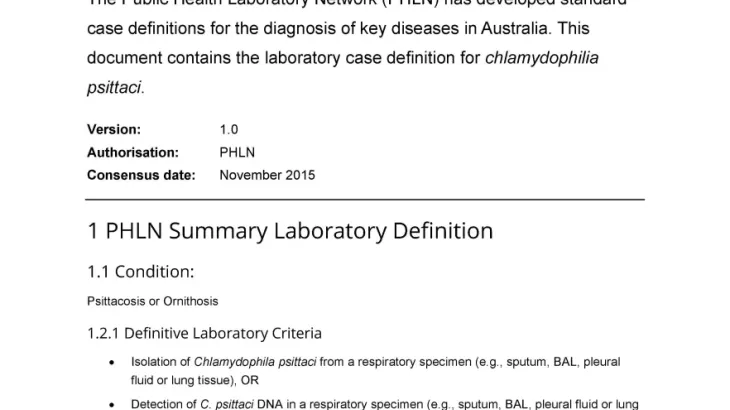
Psittacosis is usually diagnosed with a blood test.
Before collecting a blood sample for testing, health professionals should discuss the need with a specialist microbiologist at the receiving laboratory. They should also include on the pathology request form that psittacosis is being considered as a diagnosis. This is because Chlamydia psittaci requires special handling.
Health professionals can also diagnose psittacosis by:
You can use healthdirect’s directory to find a health service near you.
Psittacosis is treated with antibiotics. Early treatment is important to reduce the risk of complications.
People who develop severe pneumonia or other complications usually need care in hospital.
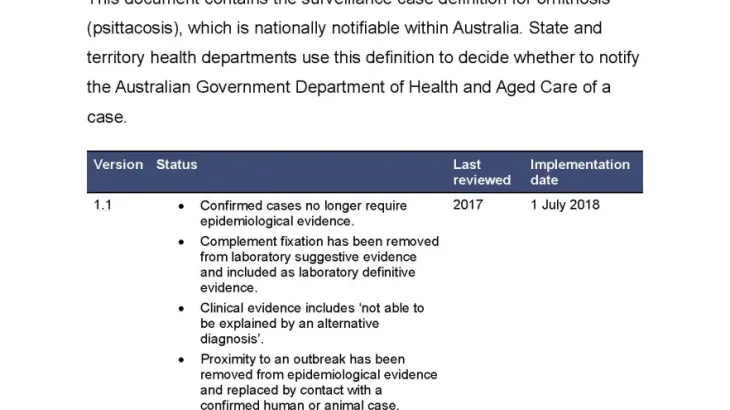
Psittacosis is a nationally notifiable disease – these are diseases that present a risk to public health.
Health authorities in each state and territory report new cases to us through the National Notifiable Diseases Surveillance System.
This is part of national surveillance activities to monitor case numbers around the country and understand disease patterns.
We analyse the data and report on case numbers and other data through our data visualisation tool, where you can filter and search the latest information.
The response to outbreaks of psittacosis in Australia focuses on:
Actions public health authorities might take during an outbreak include:
Read more about how the Australian Government defines and plans for outbreaks.
For information about psittacosis in your state or territory, see:
If you need mental health support, see a list of organisations, websites and services that offer support, counselling and information.