Last updated:
Disease groups:
Rotavirus is a highly contagious virus that can cause severe gastroenteritis. It spreads through contact with an infected person or things contaminated with faeces or vomit. Vaccination in infancy and good hygiene are the best protection. We monitor and report on rotavirus cases.
Rotavirus is highly contagious. Infection with rotavirus is usually mild and most people recover quickly, but it can be serious, especially for certain groups.
Vaccination in infancy and good hygiene are the best ways to prevent the spread of rotavirus.
Rotavirus can cause outbreaks and serious illness, especially in unvaccinated children and people who are immunocompromised.
Before rotavirus vaccination became part of the National Immunisation Program schedule in 2007, it was a leading cause of severe gastroenteritis in children in Australia.
Routine vaccination of babies has helped reduce the number of cases across all ages. Among children aged under 5 years, there has been a drop of about:
But outbreaks still occur and can put pressure on our healthcare system and families.
Because of this, we:
If you’re looking for advice about your own health or treatment options, see healthdirect or speak with a qualified healthcare professional. Our role is to provide public health advice – information and guidance that helps prevent disease, protect communities and improve wellbeing at a population level.
Most people with rotavirus have no or mild symptoms and recover quickly. Symptoms are usually more severe in unvaccinated children and people who are immunocompromised.
Common symptoms include:
Some people can develop serious illness and might need hospitalisation.
Read more about symptoms, diagnosis and treatment of rotavirus.
healthdirect’s symptom checker can help you decide whether to see a healthcare professional.
Symptoms usually start between 24 and 72 hours after being infected.
Rotavirus spreads very easily. It most often spreads through contact with:
Most children have been exposed to rotavirus by 3 years of age and have developed some immunity. This reduces the risk of severe disease in later infections.
People with rotavirus are infectious from when their symptoms begin, for about 10 days.
Some people may be infectious for longer, including people who are immunocompromised.
Vaccination in babies aged under 6 months is the best way to protect against severe illness from rotavirus.
It is very important for infants to be vaccinated on time, because there are age limits to vaccination.
Rotavirus vaccine is free for infants aged under 6 months through the National Immunisation Program.
You can protect against rotavirus by regularly washing your hands, especially:
It’s also important to:
Your state or territory recommendations may be different. Always follow your local government’s advice.
Some people are at greater risk of getting rotavirus or getting very sick from it.
Rotavirus can spread quickly in homes and other settings including:
Rotavirus is also more common in some remote communities and can spread quickly.
If you are at greater risk, it is especially important to:
People at greater risk of severe disease from rotavirus include:
Those most at risk of exposure include:
If your health professional suspects you or your child has rotavirus, you may be asked to collect a stool sample. The sample will then be tested for rotavirus in a laboratory.
You can use healthdirect’s directory to find a health service near you.
There is no specific treatment for rotavirus.
If you or your child has rotavirus, it’s important to drink plenty of fluids.
Some people may need to go to hospital to manage symptoms or dehydration.
Read more about how to manage or treat rotavirus.
Rotavirus is a nationally notifiable disease – these are diseases that present a risk to public health.
Health authorities in each state and territory report cases to us daily through the National Notifiable Diseases Surveillance System.
This is part of our surveillance activities, which help us monitor case numbers around the country and understand disease patterns.
We analyse the data and report on case numbers and other data through our data visualisation tool, where you can filter and search the latest information.
State and territory health departments provide guidance and support for outbreaks of rotavirus or gastroenteritis in high-risk settings.
Read more about how the Australian Government defines and plans for outbreaks.
For information about rotavirus in your state or territory see:
Rotavirus is a non-enveloped ribonucleic acid (RNA) virus in the Reoviridae family.
The clinical presentation of rotavirus infection ranges from asymptomatic to causing life-threatening gastroenteritis.
Symptoms, when present, include:
Symptoms are usually more severe in unvaccinated children and in people who are immunocompromised.
Serious complications include:
Read more about the diagnosis and treatment of rotavirus.
Before rotavirus vaccination became part of the National Immunisation Program schedule in 2007, it was a leading cause of severe gastroenteritis in children in Australia.
Rotavirus remains a leading cause of severe gastroenteritis among young children globally, causing significant disease and death, especially in low- and middle-income countries.
Outbreaks of rotavirus infection still occur domestically and can have a substantial impact on the healthcare system and families.
Because of this we monitor and report on the number of cases in Australia.
Rotavirus infection is most commonly diagnosed in children aged under 5 years.
In 2024, there were more than 10,000 cases diagnosed in Australia – the highest number since it became nationally notifiable in 2018.
Since the rotavirus vaccine became part of the National Immunisation Program in 2007, in children aged under 5 years, there has been a reduction of:
Rotavirus hospitalisations have also decreased in older age groups, suggesting rotavirus vaccines may provide some population-level protection (herd immunity).
Aboriginal and Torres Strait Islander children have higher rates of hospitalisation due to rotavirus than non-Indigenous children.[2]
For the latest information on rotavirus incidence, severity, transmission and virology in Australia see:
Rotavirus is highly contagious and is mainly spread through the faecal–oral route.
Transmission can happen through contact with:
Symptoms usually start between 24 and 72 hours after exposure.
People with rotavirus are infectious during the acute stage of illness, for about 10 days. Some people may be infectious for longer, including people who are immunocompromised.
Rotavirus poses a greater risk of severe disease for:
Read more about measures people can take to protect themselves.
Those most at risk of exposure to rotavirus include:
See what measures people can take to protect themselves.
Rotavirus can spread quickly in homes and other settings, including:
Rotavirus is also more common in some remote communities and can spread quickly.
A rotavirus outbreak in these settings may require a public health response.
Read more about the prevention, control and public health management of outbreaks.
Rotavirus vaccination is provided free under the National Immunisation Program, and is recommended for all infants aged under 6 months.
Age upper limits apply, so it’s important for infants to be vaccinated on time.
Rotavirus vaccines prevent severe disease and reduce the risk of rotavirus infection in children. Other people in the population also appear to benefit from herd protection.
See the Australian Immunisation Handbook for more information, and who is eligible for free rotavirus vaccination under the National Immunisation Program.
Frequent hand hygiene prevents the spread of rotavirus, especially:
It is also important to:
State and territory recommendations and regulations may differ and should be followed.
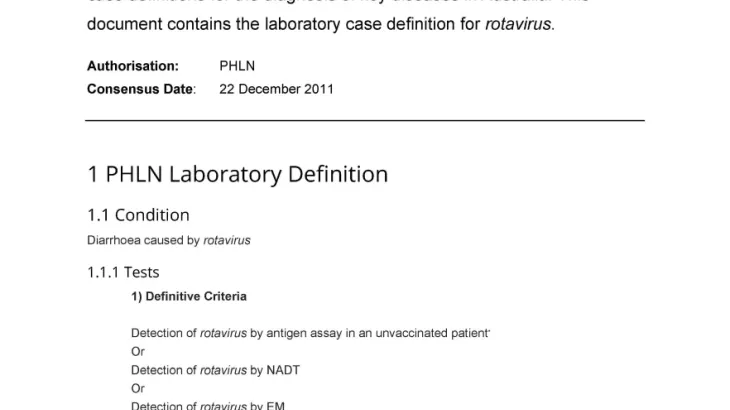
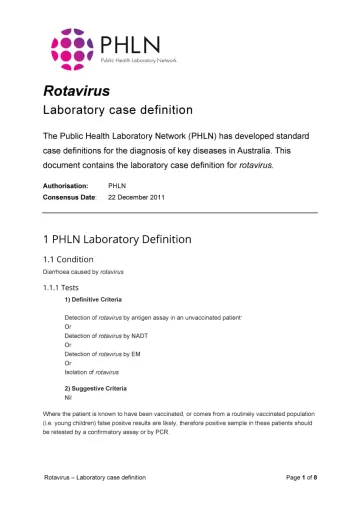
Rotavirus infection is usually diagnosed through laboratory testing.
Rotavirus antigen testing requires a faecal sample.
Polymerase chain reaction testing may also be used to detect rotavirus RNA in a faecal sample.
There is no specific treatment for rotavirus.
Clinical management consists of supportive care, including adequate fluid intake.
Some people may require hospitalisation for the management of symptoms or dehydration.
Read more about the clinical management of rotavirus.
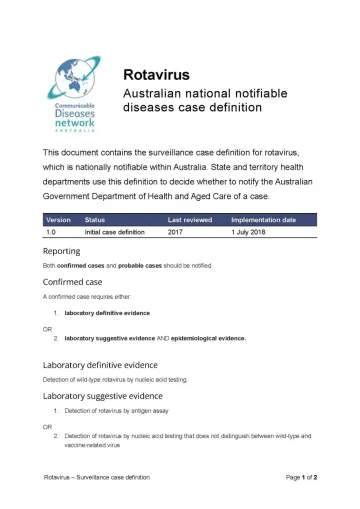
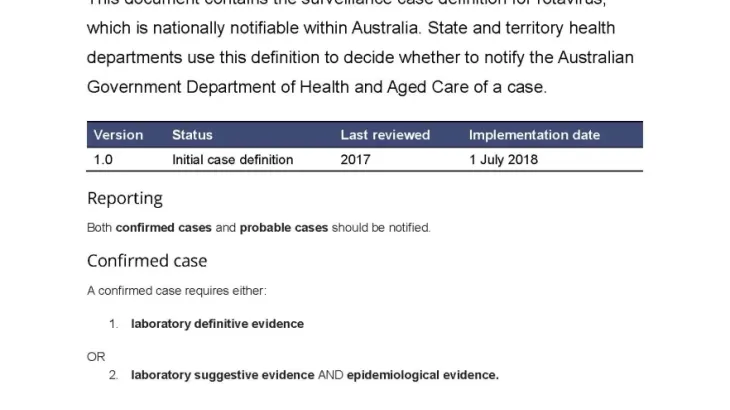
Rotavirus is a nationally notifiable disease. This means certain health professionals must report diagnoses through their relevant health authorities.
Check how to report laboratory-confirmed rotavirus cases or a related death in your state or territory:
State and territory health authorities report new cases to us daily through the National Notifiable Diseases Surveillance System, as part of our surveillance activities.
We report case numbers and other data through our data visualisation tool, where you can filter and search the latest information.
Public health investigation is not usually undertaken for individual rotavirus cases.
The recommendations for people with rotavirus infection vary by state and territory.
There may be specific restrictions for people who attend high-risk settings or who work in occupations where rotavirus can quickly spread. These include:
Contact tracing and management is usually not undertaken for individual rotavirus cases.
The public health response to rotavirus generally focuses on high-risk settings.
Special situations and high-risk settings might require extra infection prevention and control actions.
These include:
State and territory requirements should be followed, where these exist, as they may differ from national guidelines.
See:
For information relevant to your state or territory, see: