Last updated:
Disease groups:
Salmonellosis is an illness caused by infection with Salmonella bacteria. It usually spreads through contaminated food. It can be serious. Good hygiene and safe food practices are the best protection. We monitor and report on national case numbers and trends.
Salmonellosis is an illness caused by certain strains of Salmonella bacteria. It usually causes gastroenteritis.
In Australia, most people who get salmonellosis get it from contaminated food.
There are other strains of Salmonella bacteria that can cause typhoid fever and paratyphoid fever, which can be serious if left untreated.
Most cases of salmonellosis are mild and the person recovers within a few days. But it can cause serious illness requiring hospitalisation, especially for people at risk of severe illness.
Salmonella is a leading cause of foodborne illness, hospitalisations, and deaths worldwide.
It is the most common identified cause of foodborne outbreaks in Australia.
It can also spread through contact with infected animals, or objects or environments contaminated with their faeces. In tropical areas, a high proportion of people who get salmonellosis are children aged under 5 years who have likely become infected from the environment.
Some types of Salmonella bacteria have evolved to become resistant to some antibiotics. This means that infections with these strains are harder to treat. Detecting these infections is critical to prevent further spread of resistant strains.
Because of these major impacts, we:
If you’re looking for advice about your own health or treatment options, see healthdirect or speak with a qualified healthcare professional. Our role is to provide public health advice – information and guidance that helps prevent disease, protect communities and improve wellbeing at a population level.
Symptoms can include:
Symptoms are usually mild and last for 3 to 7 days, although they can last much longer.
In some cases, complications can include:
Some people can become chronic carriers. They might have no or mild symptoms, but can spread the infection to others for a long time.
Read more about the symptoms, diagnosis and treatment of salmonellosis.
healthdirect’s symptom checker can help you decide whether to see a health professional.
Symptoms usually start 12 to 36 hours after exposure, but this can range from 6 hours to 3 days.
Salmonella bacteria live in the intestines of people and animals, including:
Salmonellosis is usually caused by eating raw or undercooked animal products or contaminated fresh produce. Chicken and eggs are common causes of outbreaks of salmonellosis from food in Australia.
The bacteria can spread from one food to another through kitchen benches, cloths, or utensils (such as knives and chopping boards) that haven’t been cleaned properly.
People can also be infected if bacteria enter their mouth through:
People with salmonellosis can spread the bacteria to others while they have symptoms.
About half of infected people can continue to spread it more than 5 weeks after their symptoms have resolved. This is more common in children and people treated with antibiotics.
There is no vaccine against salmonellosis.
The best way to protect against infection is to safely prepare, handle, cook and store food.
It is important to avoid higher-risk foods and drinks such as:
It’s also important to always practise good hand hygiene.
Good hygiene and food safety practices are especially important if you’re travelling overseas.
If you are diagnosed with salmonellosis, you should:
Children with salmonellosis should not go to childcare until 1 day after their diarrhoea has stopped.
People with salmonellosis who work as food handlers should not go to work until 2 days after their symptoms have resolved.
Read more ways to prevent salmonellosis.
Your state or territory recommendations may be different. Always follow your local government’s advice.
Some people are at greater risk of salmonellosis or getting very sick from it.
If you are at greater risk, it is especially important to take steps to protect yourself.
Salmonellosis poses a greater risk of severe illness for:
Anyone can get a salmonellosis. But people are at greater risk of being exposed if they:
Food handlers, healthcare workers, and childcare workers with no symptoms or mild symptoms can transmit infection to others at risk for severe disease. Prevention measures are important for these groups.
Salmonellosis is usually diagnosed through a stool test. Sometimes a blood test or urine test might be used.
You can use healthdirect’s directory to find a health service near you.
Most people recover within about a week with supportive care – such as adequate fluid intake.
Because people with salmonellosis usually get better on their own, most infections don’t require antibiotic treatment.
Antibiotics are not usually needed for salmonellosis – and their unnecessary use can contribute to antimicrobial resistance.
But healthcare professionals may prescribe antibiotics to people with:
Salmonellosis is a nationally notifiable disease – these are diseases that present a risk to public health.
Health authorities in each state and territory report new laboratory confirmed cases to us daily through the National Notifiable Diseases Surveillance System.
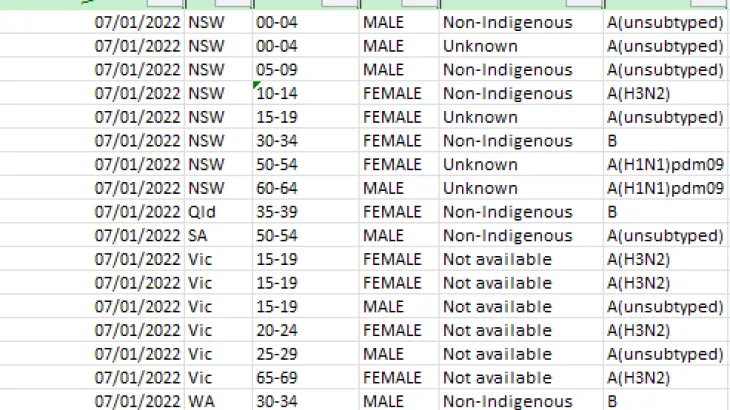
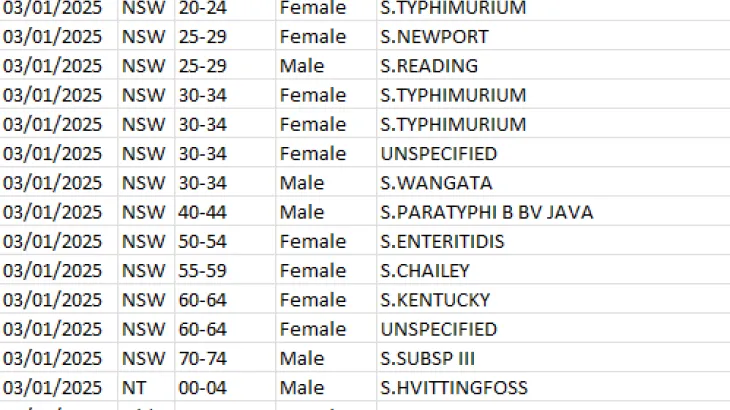
We report additional data in our public dataset.
We also collect and analyse data on salmonellosis cases through the OzFoodNet Network. This includes investigating foodborne outbreaks.
This is part of our surveillance activities, which help us monitor case numbers around the country, understand disease patterns and identify outbreaks.
We analyse the data and report on case numbers through our data visualisation tool, where you can filter and search the latest information.
Outbreaks can happen when many people become infected, often from eating contaminated food from the same source.
State and territory health departments investigate outbreaks by:
Outbreak control measures might include:
Read more about how the Australian Government defines and plans for outbreaks.
For information about salmonellosis in your state or territory, see:
If you need mental health support, see a list of organisations, websites and services that offer support, counselling and information.
For travel advice, see Smartraveller.