Last updated:
Disease groups:
Shigellosis is a type of bacterial gastroenteritis. It can be serious. It usually spreads through contact with stool from an infected person. Good hygiene practices are the best protection. We monitor and report on national case numbers and trends.
Shigellosis is caused by infection with Shigella bacteria. It is highly contagious.
Most people with shigellosis get diarrhoea.
There is no vaccine for shigellosis, but it can be prevented.
In some countries, shigellosis is a major cause of diarrhoea-related death in young children.
In Australia, many infections are diagnosed in people returning from overseas. But outbreaks have also been reported in Australia among:
Outbreaks have been linked to limited access to clean water, adequate sanitation, quality housing and healthcare.
Some Shigella bacteria are becoming resistant to some antibiotics. This means that these infections are harder to treat. Detecting these infections is critical to prevent further spread of resistant bacteria.
Because of these major impacts, we:
If you’re looking for advice about your own health or treatment options, see healthdirect or speak with a qualified healthcare professional. Our role is to provide public health advice – information and guidance that helps prevent disease, protect communities and improve wellbeing at a population level.
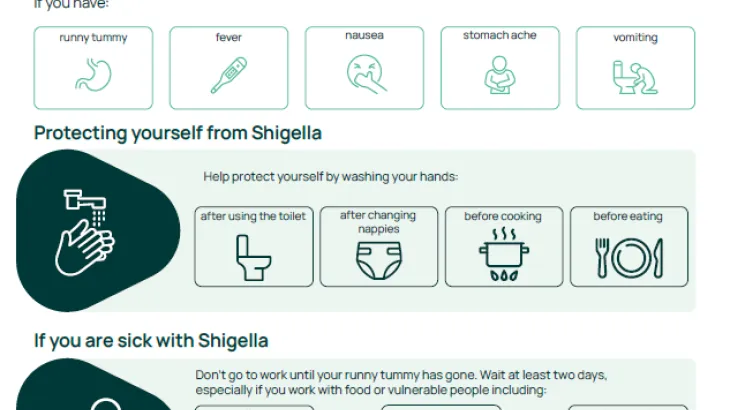
Symptoms of shigellosis include:
Symptoms usually resolve without treatment in 4 to 7 days but can last longer.
Dehydration is a common complication, especially in young children.
Rarely, shigellosis can lead to serious complications, including:
Read more about the symptoms, diagnosis and treatment of shigellosis.
healthdirect’s symptom checker can help you decide whether to see a health professional.
Symptoms usually start between 1 and 3 days after getting infected. But this can range from 12 hours to 1 week.
Shigellosis is highly contagious. Only a few bacterial cells are enough to cause infection.
Shigella bacteria are present in the stools of infected people.
The infection spreads when the bacteria enter another person’s mouth. This can happen through:
People can get shigellosis more than once.
People with shigellosis spread the infection most easily while they have diarrhoea and for 2 days after diarrhoea stops. But they can remain infectious for up to 4 weeks.
Rarely, people without symptoms can carry and spread the bacteria for months.
To reduce the risk of shigellosis, people should:
Until advised by a health professional they can resume normal activities, people with shigellosis should:
Read more ways to prevent shigellosis.
Some people are at greater risk of getting shigellosis or getting very sick from it.
Settings that make it more likely for shigellosis to spread might include:
People at greater risk should take steps to protect themselves.
Shigellosis poses a greater risk of severe illness for:
Anyone can get shigellosis. People are at greatest risk of getting shigellosis if they have close contact – including household or sexual contact – with someone with shigellosis.
But people might be more likely to be exposed if they:
Read more information about preventing shigellosis for remote communities.
Shigellosis is diagnosed through a stool test.
You can use healthdirect’s directory to find a health service near you.
Most people with shigellosis recover within about a week without treatment. It is very important for people with shigellosis to stay hydrated.
Some people with shigellosis are treated with antibiotics. People with severe symptoms or complications might need to be cared for in hospital.
Shigellosis is a nationally notifiable disease – these are diseases that present a risk to public health.
Health authorities in each state and territory report new laboratory confirmed cases and probable cases to us daily through the National Notifiable Diseases Surveillance System.
The OzFoodNet network monitors and responds to foodborne diseases in Australia, including shigellosis.
This is part of our surveillance activities, which help us monitor case numbers around the country and understand disease patterns.
We analyse the data and report on case numbers and other data through our data visualisation tool, where you can filter and search the latest information.
The response to outbreaks of shigellosis in Australia focuses on:
Actions public health authorities might take during an outbreak include:
Read more about how the Australian Government defines and plans for outbreaks.
For information about shigellosis in your state or territory, including exclusion policies, see:
If you need mental health support, see a list of organisations, websites and services that offer support, counselling and information.
For travel advice, see Smartraveller.