
Last updated:
At a glance
- No vaccine available – read more about prevention
- Nationally notifiable disease
About Vibrio parahaemolyticus infection
Vibrio parahaemolyticus is a bacterium found in seawater.
It causes gastroenteritis, wound infections and ear infections, which can be serious for certain groups.
It mainly spreads to people when they eat contaminated raw or undercooked seafood – especially oysters – or through contact with seawater.
Why it matters to public health
Vibrio parahaemolyticus grows naturally in seawater.
Outbreaks in Australia have been linked to contaminated oysters.
Warmer conditions increase the number of bacteria in seawater and seafood, making infections in people more likely.
Rising sea temperatures associated with climate change could lead to an increased risk of Vibrio parahaemolyticus infection outbreaks in Australia.
Because of this, we:
- work with other sectors to ensure a coordinated One Health approach to share information, monitor and report on Vibrio parahaemolyticus infections in Australia
- plan for how to manage outbreaks.
Symptoms
If you’re looking for advice about your own health or treatment options, see healthdirect or speak with a qualified healthcare professional. Our role is to provide public health advice – information and guidance that helps prevent disease, protect communities and improve wellbeing at a population level.
Symptoms of Vibrio parahaemolyticus gastroenteritis include:
- watery diarrhoea (sometimes with blood)
- cramping abdominal pain
- nausea
- vomiting
- fever.
Symptoms are usually mild, and most people feel better within a few days.
In moderate to severe infections, dehydration can occur.
Vibrio parahaemolyticus wound infections are usually mild. Symptoms can include:
- pain
- redness
- warmth
- pus or discharge.
Rarely, blood poisoning (sepsis) can occur. This is more likely in people with liver disease or immune disorders.
Healthdirect’s symptom checker can help you decide whether to see a health professional.
Onset of symptoms
Symptoms usually start within 24 hours after getting infected. But this can range from 4 hours to 7 days.
How it spreads
People can get infected by eating raw or undercooked seafood, such as:
- shellfish – including oysters, mussels and clams
- fish
- crustaceans – including crabs, lobsters and prawns.
Less commonly, people can also get infected if:
- they drink contaminated seawater
- contaminated seawater gets into a cut or wound, or the ears.
Infectious period
Vibrio parahaemolyticus infection does not usually spread between people.
Prevention
There is no vaccine against Vibrio parahaemolyticus.
The best protection is to:
- avoid eating chilled, ready-to-eat or raw seafood if at greater risk of severe disease
- handle, prepare and store food safely and maintain good hygiene, including:
- cooking seafood to an internal temperature of 65 °C
- refrigerating seafood immediately after buying or catching it
- keeping raw seafood away from ready-to-eat or cooked foods
- washing hands often with soap and water after handling raw seafood
- not using seawater to wash or prepare food
- buy seafood from trusted or licensed suppliers
- wash wounds that have been exposed to seawater with soap and clean water
- stay safe while travelling overseas.
Priority groups and settings
Some people are at greater risk of infection or getting very sick from it.
People at greater risk should take steps to protect themselves.
People at greater risk of severe disease
Vibrio parahaemolyticus infection poses a greater risk of severe illness for people who:
- are immunocompromised
- have some chronic conditions, such as liver or kidney disease or diabetes
- use alcohol excessively.
People at greater risk of exposure
People might be more like to be exposed if they:
- eat raw or undercooked seafood, especially shellfish
- are often in or around coastal waters, for either work or recreation.
Diagnosis and treatment
Vibrio parahaemolyticus infection is usually diagnosed with a stool test.
Healthcare professionals may collect a wound swab from people with an infected wound.
You can use healthdirect’s directory to find a health service near you.
Most people infected with the bacteria will get better within a few days without any treatment. Treatment is supportive, including staying hydrated.
People may be treated with antibiotics if they have severe illness or infected wounds.
Surveillance and reporting
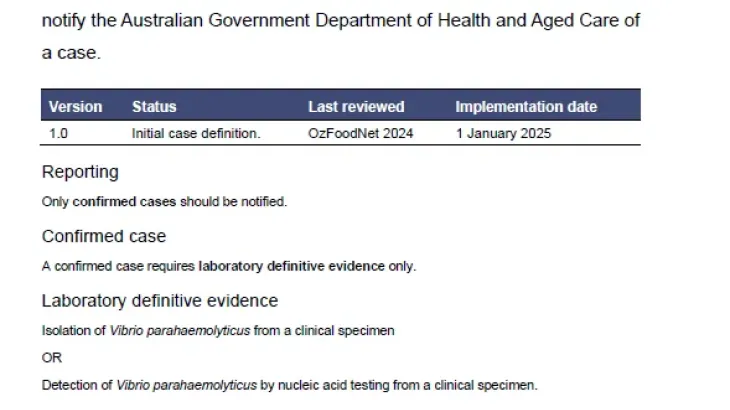
Vibrio parahaemolyticus infection is a nationally notifiable disease – these are diseases that present a risk to public health.
Health authorities in each state and territory report new laboratory confirmed cases to us daily through the National Notifiable Diseases Surveillance System.
The OzFoodNet network also monitors and responds to foodborne diseases in Australia.
These are part of our surveillance activities, which help us monitor case numbers around the country and understand disease patterns.
We analyse the data and report on case numbers and other data through our data visualisation tool, where you can filter and search the latest information.
Outbreaks
The response to foodborne outbreaks of Vibrio parahaemolyticus infection focuses on:
- finding the likely source of infection
- preventing further infections.
Public health authorities might put out alerts to inform people about the risk and provide prevention advice.
Some foodborne outbreaks might lead to food recalls.
They might require a One Health response, involving collaboration between human health, animal health, and environmental sectors. This is because of potential impacts on seafood industries, trade and ecosystem health.
Read more about how the Australian Government defines and plans for outbreaks.
Support
For information in your state or territory, see:
- Australian Capital Territory
- New South Wales
- Northern Territory
- Queensland
- South Australia
- Tasmania
- Victoria
- Western Australia.
If you need mental health support, see a list of organisations, websites and services that offer support, counselling and information.