At a glance
- Vaccine preventable – check who’s eligible
- Vaccine included on the National Immunisation Program – check who’s eligible
- Nationally notifiable disease
About RSV
RSV is a common and highly contagious virus that can cause respiratory infections.
RSV can cause mild to severe illness. Most people recover within a few days. Some people are at higher risk of getting severely unwell.
RSV infections most often affect children aged under 2 years.
RSV vaccines are available for people at higher risk of becoming severely unwell.
Why it matters to public health
RSV is a leading cause of infection of the lower airways and lungs in young children and older adults. Almost all children have been infected with RSV by 2 years of age. Reinfection with RSV can occur throughout life.
RSV is a common cause of hospitalisation in young infants during autumn and winter. It is also an important cause of respiratory infection and hospitalisation in older adults and people at increased risk of severe disease.
Because of these impacts, we monitor and report on national case numbers, hospitalisations, and epidemiological trends.
Symptoms
If you’re looking for advice about your own health or treatment options, see healthdirect or speak with a qualified healthcare professional. Our role is to provide public health advice – information and guidance that helps prevent disease, protect communities and improve wellbeing at a population level.
Common symptoms include:
- fever
- runny or stuffy nose
- sore throat
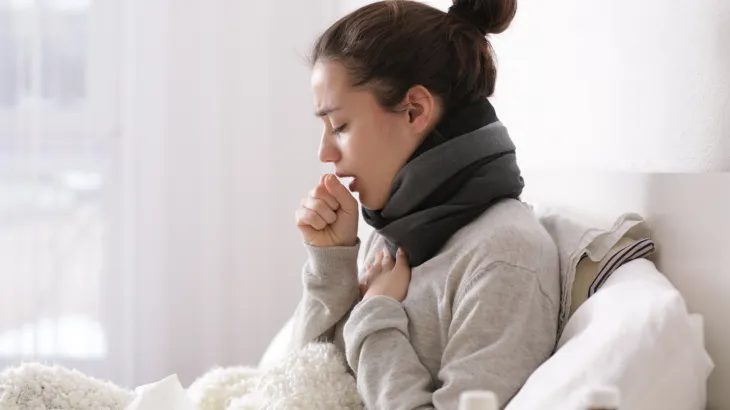
- cough
- ear pain.
Symptoms might range from mild to severe, and you might not get all those symptoms.
Young babies might get more severe symptoms, including:
- wheezing
- difficulty breathing
- irritability
- poor feeding.
healthdirect’s symptom checker can help you decide whether you need to see a health professional.
Onset of symptoms
Symptoms usually start around 2 to 8 days after getting infected.
How it spreads
RSV spreads easily through droplets and secretions from your respiratory tract. When you do things like cough or sneeze, these droplets spread through the air or land on people and surfaces.
Other people can catch RSV by:
- their mouth, nose or eyes coming into contact with these droplets
- breathing in these droplets
- touching surfaces or objects that have been in contact with an infected person, then touching their mouth, nose or eyes.
Read more about how RSV spreads.
Infectious period
You can infect others for around 7 to 10 days after symptoms begin.
Prevention
Vaccination
RSV vaccination is recommended for:
- pregnant people, to protect newborn babies
- people aged 75 years or older
- Aboriginal and Torres Strait Islander people aged 60 years or older
- people with medical risk factors for severe RSV disease aged 60 years or older.
RSV monoclonal antibodies are recommended for young babies at increased risk of severe RSV disease to help their body fight off an infection. This includes those whose mother or birthing parent did not get vaccinated while pregnant at least 2 weeks before delivery.
From 2025, eligible pregnant people can get the RSV vaccine for free under the National Immunisation Program. If you are not eligible for a free vaccine, you can buy one from your health professional or pharmacy.
Other prevention steps
Other ways to protect against RSV are to:
- put physical distance between yourself and others
- maintain good hygiene, including by regularly washing your hands and maintaining respiratory hygiene
- avoid touching your eyes, nose and mouth, particularly if you are around people who are unwell
- regularly clean objects and surfaces you use often, such as mobile phones and door handles.
Protecting others
If you or your child have RSV symptoms:
- stay home while you have acute symptoms
- wear a mask if you need to leave home
- don’t visit people who are at higher risk of severe disease
- maintain good hand and respiratory hygiene.
Read more ways to prevent RSV.
Priority groups and settings
Some people are at greater risk of getting RSV infection or of getting very sick from it.
RSV can spread quickly in homes and other settings including:
- residential aged care homes
- other residential care facilities
- childcare centres
- schools.
Read more about preventing infectious diseases in early childhood education and care services.
People at greater risk of severe disease
RSV poses a greater risk of severe illness for:
- babies and young children, especially those who were born prematurely
- people aged 60 years or older
- Aboriginal and Torres Strait Islander people
- people with some chronic conditions
- people with weakened immune systems.
People at greater risk of becoming infected
People are at greater risk of becoming infected if they have had contact with someone who has RSV infection – especially if you have been in close contact, such as living in the same house.
Diagnosis and treatment
Your health professional can diagnose RSV infection with a test. The sample is usually collected from your nose or throat with a swab and sent to a laboratory for testing.
You can test yourself with a rapid antigen test (RAT) that detects RSV. These tests are widely available in supermarkets and pharmacies. These are not as accurate as tests from your health professional.
Read more about diagnosing RSV.
You can use healthdirect’s directory to find a health service near you.
Most people will get better without any treatment within 7 to 10 days.
Antibiotics are not used to treat RSV because they do not work for viral infections. Taking antibiotics when you don’t need them can increase the risk of antibiotic resistance.
Read more about how to manage or treat RSV.
Surveillance and reporting
RSV is a nationally notifiable disease – these are diseases that present a risk to public health.
Health authorities in each state and territory report new cases to us daily through the National Notifiable Diseases Surveillance System.
We also track RSV cases through other surveillance systems, including:
- Australian Sentinel Practice Research Network (ASPREN)
- Influenza Complications Alert Network (FluCAN)
- Short Period Incidence Study of Severe Acute Respiratory Infection (SPRINT-SARI).
This is part of our surveillance activities, which help us monitor case numbers around the country and understand disease patterns.
We analyse the data, and report on RSV case numbers through:
- the Australian respiratory surveillance reports
- our data visualisation tool, where you can filter and search the latest information.
The Australian national surveillance plan for COVID-19, influenza, and RSV guides how we collect, analyse and report on health-related data for RSV.
Outbreaks
Seasonal RSV outbreaks occur most often in autumn and winter months.
We provide guidance for managing outbreaks of respiratory infections, including RSV, in aged care homes.
State and territory health departments provide guidance and support for outbreaks of respiratory infections, including RSV – for example, in aged care homes or hospitals.
Read more about how the Australian Government defines and plans for outbreaks.
Support
For information about RSV in your state or territory see:
Quick links
Disease
Infectious agent
RSV is a single-stranded, negative-sense ribonucleic acid (RNA) virus and a member of the Pneumoviridae family. The 2 major RSV subtypes are:
- RSV A
- RSV B.
Strains from both groups can co-circulate each season.
Clinical presentation
Most RSV cases present with a mild to moderate respiratory illness, but some groups of people may develop more severe disease.
Primary infection with RSV – most often seen in infants and young children aged under 2 years – is generally more severe than subsequent infections at older ages.
Clinical features typically include:
- fever
- rhinorrhoea and nasal congestion
- sore throat
- cough
- otitis media.
Babies aged under 6 months can present with more severe clinical features, including:
- wheezing
- dyspnoea
- irritability
- poor feeding.
Serious complications of RSV infection at any age can include:
- pneumonia
- acute respiratory distress
- congestive heart failure
- myocarditis (rarely)
- seizures and encephalopathy (fewer than 1% of patients)
- worsening of some chronic conditions, such as chronic lung and heart disease.
Read more about symptoms, diagnosis and treatment of RSV.
Public health importance
RSV is a leading cause of lower respiratory tract infection in young children and older adults.
The rate of hospitalisation as a result of RSV infection is:
- about 500 per 100,000 children aged under 5 years
- about 3,100 per 100,000 babies under 3 months – the highest rate of RSV-associated hospitalisations compared with other age groups.[1],[2]
In addition, Aboriginal and Torres Strait Islander children have twice the rate of RSV-associated hospitalisation as non-Indigenous children.[1]
RSV-associated deaths are rare in immunocompetent people, but can occur in young infants and, more commonly, in older adults.[2]
Epidemiology
RSV typically causes seasonal outbreaks during autumn and winter, with peaks between April and July, which can vary year-to-year. In tropical regions, RSV outbreaks may coincide with rainy seasons.
Almost all children have had an RSV infection by 2 years of age. RSV reinfection can occur throughout life.
For the latest information on cases of RSV in Australia see:
Spread of infection
Transmission
Person-to-person transmission most commonly occurs by direct contact of nasopharyngeal or ocular mucous membranes with virus-containing secretions or fomites.
RSV can persist for up to several hours on hard surfaces and skin.
RSV can also be spread by breathing in respiratory droplets containing RSV.
Incubation period
The incubation period can range from 2 to 8 days.
Infectious period
The infectious period is likely from before symptoms start until recovery (usually up to 10 days).[3]
Priority populations
People at greater risk of severe disease
RSV poses a greater risk of severe illness for:
- babies and young children (under 5 years old), especially if they had a preterm birth
- older people (aged 65 years or older)
- Aboriginal and Torres Strait Islander people
- people who are immunocompromised
- people who have certain medical conditions.
Read more about:
- vaccination recommendations for people at greater risk of severe disease
- measures people can take to protect themselves.
People at greater risk of becoming infected
People are at greater risk of becoming infected with RSV if they have had contact with someone who has RSV – especially if they have been in close and prolonged contact (such as living in the same house).
Infants who are infected most often get RSV from older siblings.[4]
People who live in or work in settings at increased risk of spread may be at risk of becoming infected if there is an outbreak.
See what measures people can take to protect themselves.
Settings at increased risk of spread
RSV spreads quickly in homes and other settings, including:
- residential care facilities
- early childhood care centres
- schools.
These settings should actively promote measures people can take to protect themselves, including by:
- promoting hand hygiene and respiratory hygiene
- regular cleaning and disinfection of frequently touched surfaces
- ensuring unwell staff – and children – stay home.
An RSV outbreak in these settings may require a public health response.
Prevention
Vaccination
RSV vaccination is recommended for:
- all people aged 75 years or over
- Aboriginal and Torres Strait Islander people aged 60 years or over
- people with medical risk factors for severe RSV disease aged 60 years or over
- people who are pregnant, to protect newborn infants.
RSV monoclonal antibodies are recommended for:
- young infants whose mother or birthing parent did not receive RSV vaccine in pregnancy or who were vaccinated less than 2 weeks before delivery
- young infants who are at increased risk of severe RSV disease, regardless of their mother or birthing parent’s vaccination status
- young children who have medical risk factors for severe RSV disease in their second RSV season.
See the Australian Immunisation Handbook for more information, including who is eligible for free RSV vaccination under the National Immunisation Program.
Other prevention steps
Other prevention measures include good hygiene practices, including:
- hand hygiene
- respiratory hygiene
- regular cleaning of frequently touched objects and surfaces.
People with acute respiratory symptoms should stay home and avoid:
- public gatherings
- crowded settings
- public transport
- school, childcare or work
- residential care facilities or hospitals.
Prevention among priority populations
It is particularly important for people at increased risk of severe illness to:
- get vaccinated, if eligible
- take precautions to protect themselves.
In the lead up to winter, extra public health initiatives aimed at preventing RSV and other respiratory virus infections may be implemented for these groups. This may include:
- encouraging eligible people to get vaccinated
- educating people on how to prevent the spread of infection.
Diagnosis and clinical management
Diagnosis
RSV is usually diagnosed through laboratory testing. Polymerase chain reaction (PCR) is the most common test in Australia. This test involves taking samples from the nose and throat.
Rapid antigen tests (RATs) that detect RSV are also available. RATs are not as sensitive as PCR at detecting infections.
Laboratory case definition
Respiratory syncytial virus – Laboratory case definition
Clinical management
RSV infections are normally self-limiting and most people will recover in 1 to 2 weeks.
Read more about the clinical management of RSV cases.
Notification and reporting
Surveillance case definition
Respiratory syncytial virus – Surveillance case definition
National notification and reporting
RSV is a nationally notifiable disease. This means certain health professionals must report diagnoses through their relevant health authorities.
Check how to report laboratory-confirmed RSV cases or related deaths in your state or territory:
- Australian Capital Territory
- New South Wales
- Northern Territory
- Queensland
- South Australia
- Tasmania
- Victoria
- Western Australia.
State and territory health authorities report new cases to us daily through the National Notifiable Diseases Surveillance System, as part of our surveillance activities.
We report case numbers and activity through our:
- Australian respiratory surveillance reports
- data visualisation tool, where you can filter and search the latest information.
We also track RSV cases through other surveillance systems, including:
- Australian Sentinel Practice Research Network (ASPREN)
- Influenza Complications Alert Network (FluCAN)
- Short Period Incidence Study of Severe Acute Respiratory Infection (SPRINT-SARI).
This helps us to:
- identify trends in RSV activity, impact, and severity
- assess the impact of respiratory virus control programs
- develop policies to minimise the impact of RSV.
Public health response
Management of cases
No public health investigation or response is required for individual RSV cases.
Public health messaging recommends that people with RSV infection should:
- stay at home until acute symptoms have resolved
- avoid contact with people at increased risk of severe disease
- take extra steps to minimise the risk of transmission to others if leaving home is necessary, such as:
- wearing face masks
- avoiding public transport and crowded, indoor areas.
Management of contacts
Contact tracing and management of contacts is usually not required for individual RSV cases.
Outbreak response
The public health response to RSV outbreaks generally focuses on high-risk settings.
Control measures used during outbreaks may include:
- encouraging vaccination
- tailoring health education and messaging
- isolating or grouping people with RSV symptoms
- increasing infection control, such as
- providing hand hygiene or personal protective equipment supplies
- increasing surface cleaning
- laundering or throwing out soiled articles.
Special situations and high-risk settings
Special situations and high-risk settings might require extra infection and control actions. These include:
- residential aged care homes – see the guidelines for residential care facilities
- other residential settings, such disability facilities
- healthcare facilities – see the guidelines for the prevention and control of infection in healthcare
- early childhood care centres – see the guidelines for preventing infectious diseases in early childhood education and care services.
Resources
See:
References
- 1 GL Saravanos, M Sheel et al., 'Respiratory syncytial virus-associated hospitalisations in Australia, 2006–2015', Medical Journal of Australia, 2019, 210(10):447–453, doi:10.5694/mja2.50159.
- 2 FB Hossain, D Muscatello et al., 'Trends in hospitalisations for vaccine preventable respiratory infections following emergency department presentations in New South Wales, Australia, 2012–2022', Influenza and Other Respiratory Viruses, 2024, 18(10):e70015, doi:10.1111/irv.70015.
- 3 PK Munywoki, DC Koech et al., 'Frequent asymptomatic respiratory syncytial virus infections during an epidemic in a rural Kenyan household cohort, Journal of Infectious Diseases, 2015, 212(11):1711–1718, doi:10.1093/infdis/jiv263.
- 4 PK Munywoki, DC Koech et al., 'The source of respiratory syncytial virus infection in infants: A household cohort study in rural Kenya', Journal of Infectious Diseases, 2014, 209(11):1685–1692, doi:10.1093/infdis/jit828.