Last updated:
Disease groups:
Middle East respiratory syndrome (MERS) is a viral respiratory illness. It can be life threatening. It mainly spreads to people from infected camels. Avoiding contact with camels when travelling to places with MERS is the best protection.
MERS is a rare but serious respiratory infection caused by a coronavirus called Middle East respiratory syndrome coronavirus (MERS-CoV).
It usually spreads to people from infected camels.
MERS is a serious illness. About 1 in 3 people diagnosed with MERS die. There is currently no vaccine against MERS.
It’s uncommon for MERS to spread between people. When it has happened, it’s usually been in homes or hospitals. Strict infection control is essential when MERS is suspected in health care facilities.
Though outbreaks have occurred outside of the Middle East, every person who has been diagnosed with MERS has lived in, travelled to, or been linked to a case from the Middle East.
The virus has never been detected in people or camels in Australia.
Because of how serious MERS can be, it is a Listed Human Disease. This means the Australian Government can use special powers to stop it from entering the country and respond quickly if it’s detected.
If you’re looking for advice about your own health or treatment options, see healthdirect or speak with a qualified healthcare professional. Our role is to provide public health advice – information and guidance that helps prevent disease, protect communities and improve wellbeing at a population level.
Most people diagnosed with MERS develop pneumonia and severe respiratory illness.
Some people have no or mild symptoms, so might not get tested or diagnosed.
Symptoms of MERS can include:
Serious complications can include:
Read more about the symptoms, diagnosis and treatment of MERS.
healthdirect’s symptom checker can help you decide whether to see a health professional.
Symptoms usually start 5 days after infection, but this can range from 2 to 14 days.
MERS-CoV is known to infect camels in some parts of the Middle East, Africa, South Asia and Central Asia.
MERS can spread to people through:
It is not known how long people with MERS are infectious.
There is no vaccine against MERS.
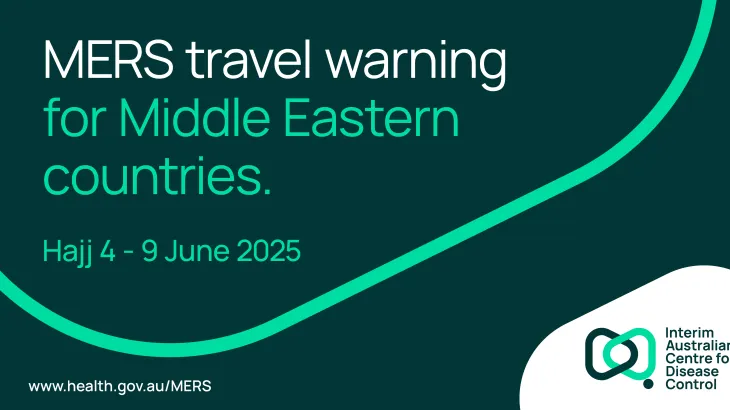
For people travelling to the Middle East and other areas impacted by MERS, the best protection is to:
Read more ways to prevent
Some people are at greater risk of getting MERS or getting very sick from it.
MERS poses a greater risk of severe illness for people who:
People are at greater risk of being exposed if they are in the Middle East and:
People who have contact with travellers to the Middle East who have had a respiratory illness or fever might also be at higher risk of exposure to MERS.
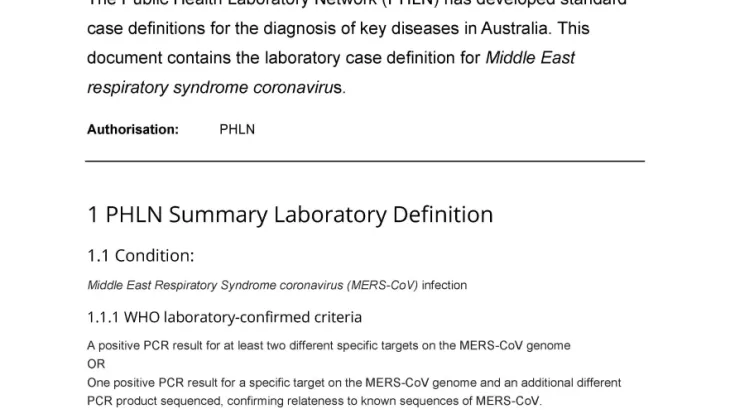
MERS can only be diagnosed through specialised laboratory testing of:
You can use healthdirect’s directory to find a health service near you.
There is no specific treatment for MERS. Most people with MERS receive supportive care in hospital.
Read more about how to manage or treat MERS.
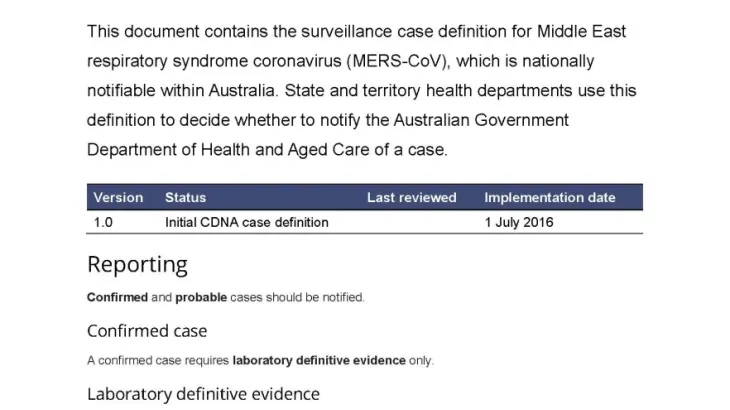
MERS is a nationally notifiable disease – these are diseases that present a risk to public health.
Health authorities in each state and territory report cases to us through the National Notifiable Diseases Surveillance System.
This is part of surveillance activities to monitor case numbers globally.
MERS-CoV has never been detected in Australia.
If a person in Australia was suspected or confirmed to have MERS, the public health response would include:
Read more about how the Australian Government defines and plans for outbreaks.
For information in your state or territory, see:
If you need mental health support, see a list of organisations, websites and services that offer support, counselling and information.
For travel advice, see: