Last updated:
Disease groups:
Q fever is a bacterial infection that can spread to people from animals, mainly through breathing in contaminated dust. It can be serious. Getting vaccinated is the best protection if you are at risk of exposure. We support national monitoring of Q fever cases and provide guidelines.
Q fever is a highly contagious bacterial disease. It is spread by infected animals and contaminated dust.
Many people don’t get any symptoms, but some people develop serious complications and longer-term effects.
Although most cases are mild, Q fever can be serious. It can cause long-term health problems.
Q fever fatigue syndrome can affect people’s quality of life and ability to do their day-to-day activities.
Chronic Q fever can make people unwell for months or years, and requires long-term medical support.
Infection during pregnancy can have serious consequences for the fetus.
The risk of Q fever is higher in people who work with animals, including in farming, veterinary work and meat processing. Outbreaks in these settings can have major impacts.
Because of this, we:
If you’re looking for advice about your own health or treatment options, see healthdirect or speak with a qualified healthcare professional. Our role is to provide public health advice – information and guidance that helps prevent disease, protect communities and improve wellbeing at a population level.
At least half of the people who get Q fever don’t have any symptoms.
Common symptoms include:
Most people recover within a few weeks, but serious complications can include:
Some people develop Q fever fatigue syndrome, which causes long-term, persistent fatigue.
A small proportion of infected people develop chronic Q fever, which can be serious.
Infection during pregnancy can lead to:
Read more about the diagnosis and treatment of Q fever.
healthdirect’s symptom checker can help you decide whether to see a health professional.
Symptoms usually start between 1 and 3 weeks after getting infected.
Animals shed the bacteria into the environment through their body fluids, including their:
People can become infected:
The bacterium can survive for a long time in the environment. It can also spread over long distances, so people can be infected even when they haven’t been around animals.
Ticks spread the bacterium in animals but human infections from ticks are rare.
Q fever does not normally transmit between people.
Q fever is vaccine preventable. Vaccination is recommended for people aged 15 years and older who are at greater risk of exposure through their job or other activities.
Before you receive a vaccination, your healthcare professional will organise a blood test and skin test. This is to check immunity to Q fever – the vaccine can’t be given to people who have already been vaccinated or had Q fever.
Eligible people can get Q fever vaccines for free under some state or territory programs. If you are not eligible for a free vaccine, you can buy one from your healthcare professional or pharmacy.
Apart from vaccination, the best way to protect against Q fever is to:
If you work around animals:
Read more about preventing Q fever.
Some people are at greater risk of getting Q fever or of getting very sick from it.
Q fever can spread among animals in agricultural settings including:
You are at greater risk of chronic Q fever if you:
Read more about measures you can take to protect yourself.
You are at greater risk of exposure if you have contact with:
You are also at greater risk if you breathe in dust from where infected animals have been – especially in areas that are mowed regularly.
People may be more likely to be exposed if they:
See what measures you can take to protect yourself.
If your healthcare professional suspects you have Q fever, they will refer you for blood tests to confirm the diagnosis.
Make sure you tell them if you have been around animals or in an area where animals might have been.
You can use healthdirect’s directory to find a health service near you.
Q fever is treated with antibiotics. Early treatment is important to reduce the risk of complications.
People with chronic Q fever need long-term antibiotics.
Read more about how to manage or treat Q fever.
Q fever is a nationally notifiable disease – these are diseases that present a risk to public health.
Health authorities in each state and territory report new cases to us through the National Notifiable Diseases Surveillance System.
This is part of national surveillance activities, to monitor case numbers around the country and understand disease patterns.
We analyse the data and publish case numbers and other data through our data visualisation tool, where you can filter and search the latest information.
Public health authorities work with animal health authorities to respond to Q fever outbreaks in people.
Control measures might include:
For information about Q fever in your state or territory see:
If you need mental health support, see a list of organisations, websites and services that offer support, counselling and information.
For travel advice, see Smartraveller.
Q fever is caused by the bacterium Coxiella burnetii.
It is highly infectious and can survive for long periods in the air, water, soil and dust.
The primary reservoirs for C. burnetii are cows, sheep and goats, but many domestic and wild animals and ticks can carry the bacterium.
At least half of Q fever infections in people are asymptomatic.
Initial symptoms can be similar to influenza including:
Less common symptoms can include:
Most people recover completely from acute Q fever within a few weeks, but serious complications can include:
Some people develop long-term, persistent fatigue following acute Q fever – called Q fever fatigue syndrome.[1]
A small proportion (less than 5%) of infected people develop chronic infection, with some groups of people at increased risk. Chronic Q fever most often manifests as endocarditis, but can affect other organs.
Infection during pregnancy can lead to:
Read about the diagnosis and treatment of Q fever.
Although most cases are mild, Q fever can cause serious disease and long-term health impacts.
Q fever fatigue syndrome can impact people’s quality of life and ability to engage in day-to-day activities.
Chronic Q fever can persist for months or years, requiring long-term medical support.
Q fever during pregnancy can lead to severe consequences for the fetus.
The disease disproportionately affects people in some occupations – including farming, veterinary work and meat processing – due to their greater risk of exposure.
Coxiella burnetii can survive in the environment for many weeks and can travel long distances in the wind. A very low dose can cause infection. This means that even small outbreaks can have major impacts.
Because of this, we:
Q fever cases occur in many parts of the world. It is endemic in Australia.
Typically, several hundred people are diagnosed with Q fever each year in Australia, with infections more common in males. In 2024, 878 Q fever cases were notified in Australia – a significant increase compared with previous years.
Cases are reported year-round but often peak in warmer months due to drier conditions and increased outdoor and farming activities.
Most cases occur in regions with high livestock density, particularly in parts of Queensland and New South Wales.
Vaccination of people at risk of exposure has reduced the incidence of Q fever in Australia.[2]
For the latest information on Q fever incidence in Australia, see the National Notifiable Diseases Surveillance System (NNDSS) data visualisation tool.
Animals shed Coxiella burnetii into the environment. This can be through their:
People can become infected by inhaling contaminated dust or aerosols, or through contact with infected animals or contaminated materials.
C. burnetii can survive in the environment for months to years. It can also spread over very long distances, so people can be infected even when they haven’t been around animals.
While rare, infections from ticks have been documented in people. Ticks remain an important vector in animal infections.
Symptoms, if present, usually start 1 to 3 weeks after exposure to the bacterium.[3]
Coxiella burnetii does not normally transmit person to person.
The risk of chronic Q fever is greater for people who:
Read more about measures people can take to protect themselves.
People are at greater risk of being infected if they are exposed to dust, soil, grass or other materials contaminated with fluids from infected animals.[5]
People at risk of exposure include those who work or have contact with:
See what measures people can take to protect themselves.
Q fever outbreaks in Australia can occur in settings where animals are present – including farms or meat processing facilities.
Read more about the prevention, control and public health management of outbreaks.
Q fever is vaccine preventable. Vaccination is recommended for people aged 15 years and older who are at greater risk of exposure through their jobs or other activities.
Vaccination is contraindicated in people who have:
Pre-vaccination testing must be done before vaccination.
See the Australian Immunisation Handbook for more information.
In addition to vaccination, the best protection against Q fever is to:
People who may be at greater risk of exposure through their work or activities should:
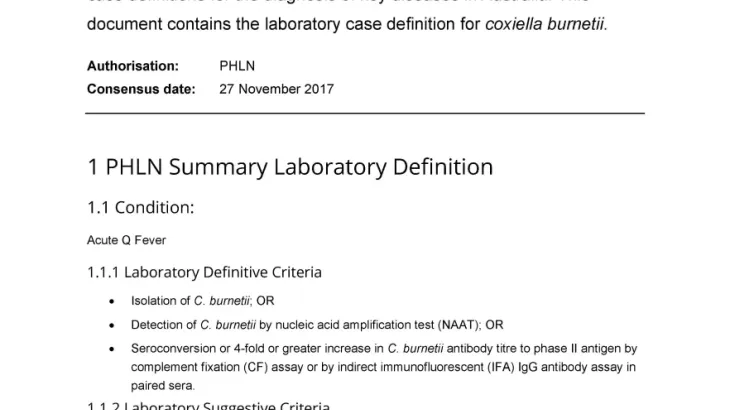
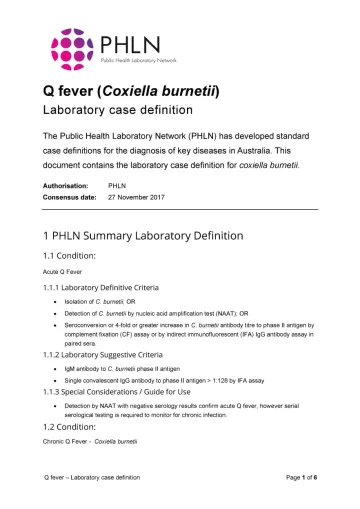
Q fever is diagnosed by laboratory testing. Because of the risk associated with laboratory acquired infection, specimens are not set up for culture.
Nucleic acid testing requires a blood sample, ideally collected within a week of symptom onset.
Serology testing requires 2 or more blood samples (acute and convalescent) collected at least 7 days apart.
Q fever is treated with antibiotics. Early treatment reduces the risk of developing chronic Q fever.
Ongoing monitoring with repeat blood testing is recommended for people with Q fever to identify chronic Q fever early. Chronic Q fever requires long-term antibiotic treatment and multidisciplinary care.
Q fever is a nationally notifiable disease. This means certain health professionals must report diagnoses through their relevant health authorities.
Check how to report laboratory-confirmed Q fever cases or related death in your state or territory:
State and territory health authorities report new cases to us daily through the National Notifiable Diseases Surveillance System, as part of our surveillance activities.
We report case numbers and other data through our data visualisation tool, where you can filter and search the latest information.
This helps us to:
Public health units investigate all confirmed cases of Q fever in people, with a focus on determining the likely source of the infection.
The person affected should be provided with information about:
Cases are advised to seek medical care if symptoms don’t resolve following treatment, or if new symptoms develop.
People with Q fever do not need to isolate.
Public health authorities follow up people who might have been exposed to the same source as a confirmed Q fever case. This can include people who:
Public health authorities provide people who might have been exposed with information about:
Public health authorities respond to Q fever outbreaks as a high priority.
Control measures used during outbreaks can include:
An unexplained increase in Q fever cases in the community might trigger:
See the: