
Last updated:
National Framework for Communicable Disease Control
The National Framework for Communicable Disease Control aims to improve how we:
- prevent, detect and respond to communicable diseases
- organise and deliver our response.
The framework gives roles and responsibilities to states and territories and the Australian Government. The system is based on 4 main functions:
- consistent surveillance and laboratory testing
- preparedness and response
- evidence-based prevention policy
- public health communications.
National Immunisation Strategy
The National Immunisation Strategy for Australia 2025 to 2030 sets a vision for a healthier Australia through vaccination.
It provides a framework to increase and sustain immunisation uptake in Australia over the next 5 years through 6 priorities.
- Improve access to immunisation, with a focus on equity for Aboriginal and Torres Strait Islander people and other priority populations.
- Build trust, understanding and acceptance of immunisation in communities.
- Use data more effectively to target immunisation strategies and monitor performance.
- Strengthen the immunisation workforce.
- Harness new technologies to respond to the evolving communicable disease and vaccine landscape.
- Implement sustainable reform in vaccine program governance, program delivery and accountability.
National Microbial Genomics Framework for Public Health
The National Microbial Genomics Framework for Public Health 2025 to 2027 provides a nationally consistent and strategic view for integrating microbial genomics into the Australian public health system.
Using this technology helps us better respond to public health threats by:
- providing a stronger understanding of infectious diseases
- improving public health surveillance
- strengthening public health decision-making
- designing vaccines, diagnostic tests and other treatments.
Bloodborne viruses and sexually transmissible infection strategies
We develop and implement a series of national strategies to address the impact of bloodborne viruses and sexually transmissible infections on the Australian community.
Together they form a framework and agreed direction for a high-quality, coordinated national response to these diseases.
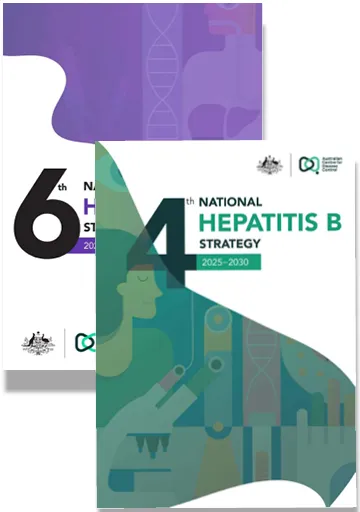
National strategies for bloodborne viruses and sexually transmissible infections
This collection contains national strategy documents that address the impact of bloodborne viruses and sexually transmissible infections on the Australian community. Together they form a framework and agreed direction for a high-quality, coordinated national response to these diseases.
National Antimicrobial Resistance Strategy
Antimicrobial resistance is one of the greatest global threats to human, animal and environmental health today.
Australia’s National Antimicrobial Resistance Strategy – 2020 and beyond is a 20-year vision. It sets out key priorities to make sure we continue to have effective antimicrobials to protect the health of humans, animals and the environment.
Read more about our work to tackle antimicrobial resistance.
Outbreak response plans
Poliovirus outbreak response
In Australia, any case of poliovirus is considered an outbreak and managed as a public health emergency.
The Poliovirus Detection Outbreak Response Plan for Australia 2024 ensures Australia is prepared for a potential polio outbreak.
Our National Authority for Containment oversees poliovirus containment in line with the Global Polio Eradication Initiative.
Syphilis outbreak response
A national syphilis outbreak is affecting Australia, and cases of syphilis have increased over the past decade.
Aboriginal and Torres Strait Islander peoples, women of reproductive age, and gay, bisexual and other men who have sex with men are priority populations for the response.
As part of our national response to syphilis, the Chief Medical Officer declared syphilis a Communicable Disease Incident of National Significance in August 2025.
We also take a national strategic response to addressing sexually transmissible infections and bloodborne viruses in priority populations, including First Nations communities.